
United Nations Economic and Social Commission for Asia and the Pacific
ST / ESCAP / 1087
New York, 1991
The designations employed and the presentation of the material in this publication do not imply the expression of any opinion whatsoever on the part of the Secretariat of the United Nations concerning the legal status of any country, territory, city or area, or of its authorities or concerning the delimitation of its frontiers or boundaries
The opinions, figures and estimates set forth in this publication are the responsibility of the authors, and should not necessarily be considered as reflecting the views or carrying the endorsement of the United Nations.
Part One
Guidelines on Establishing and Strengthening Self-Help Organizations of Disabled Persons
- I. Background
- II. How to Use the Guidelines
- III. Definitions
- A. Disability and handicap
- B. Self-help
- C. A self-help organization of disabled persons
- D. Support services
- E. Independent living
- A. Disability and handicap
- IV. Why Begin?
- V. How to Begin
- VI. How to Strengthen a Self-Help Organization
- Research on the situation, needs and potential of people with disabilities, and community resources and needs
- Planning as a key to success
- Monitoring and evaluation
- Resource mobilization
- Income-generation
- Official registration of organization
- Financial management and budgeting
- Ensuring accountability
- Peer support to empower disabled persons
- Training
- Setting-up an office, and staffing
- Support services
- Developing positive relations with the community, government agencies and non-governmental organizations
- Active participation in a national forum of self-help organizations in the field of disability
- Involvement in a national co-ordinating committee on disability issues
VII. Follow up to the Guidelines
Annex Project idea: Development of community-based support services for rural disabled persons
Appendices
Part Two
- Fiji Disabled People's Association: A Case-study of A Self-help Organization of Disabled People in Fiji
- Philippine Experience in Promoting the Organization of Disabled Persons on A Self-help Basis
- The National Association of The Deaf in Thailand
- Disabled People's International-Thailand: A Case study
- Sri Lanka Federation of the Visually Handicapped: A Case-study of a Self-help Organization of Disabled People in Sri Lanka
- Observations and Experience Concerning Organizations of People with Physical Disabilities in Sri Lanka
Preface
In the course of the United Nations Decade of Disabled Persons (1983-1992), it has come to be increasingly recognized that the majority of people with disabilities, particularly those in developing countries, continue to be marginalized from mainstream development policies and programmes. According to United Nations estimates, no more than 2-3 per cent of the disabled people who need rehabilitation are receiving such services. Lack of participation and self-representation of people with disabilities in processes that determine policies and services affecting their well-being has contributed to the neglect of their needs.
As part of its effort to address these concerns, the Economic and Social Commission for Asia and the Pacific (ESCAP) undertook a project entitled "Assistance to the development of self-help organizations of disabled persons". The preparation of "Self-help Organizations of Disabled Persons" is an activity under the project.
The publication has been prepared to promote and support the self-help movement of people with disabilities in Asia and the Pacific. It is hoped that through such self-help initiatives to establish independent and productive lives as are outlined in this publication, people with disabilities may contribute directly to the fulfilment of the goals of full participation and equality in social life and development. These goal are contained in the World Programme of Action concerning Disabled Persons, adopted by the General Assembly on 3 December 1982, by resolution 37/52.
It is further hoped that the issuance of this publication on the threshold of 1992--the year that concludes the United Nations Decade of Disabled Persons--will provide a special impetus to all Governments, organizations and individuals who are concerned with disability issues to commit themselves to supporting organizations of people with disabilities.
In the preparation of this publication, the ESCAP secretariat consulted numerous experts. It convened in February 1991 the Expert Group Meeting on Self-help Organizations of Disabled Persons to seek comments on a preliminary draft that it had prepared. Case-studies of organizations of disabled persons presented at the Meeting are contained in Part two of this publication. The draft guidelines on establishing and strengthening self-help organizations of disabled persons were field-tested at an ESCAP-supported national training workshop held at Kathmandu in July-August 1991. The ESCAP secretariat also circulated the guidelines in draft form to a number of experts for review and comment.
Appreciation is expressed to all those experts, among whom are outstanding leaders of organizations of disabled persons in the ESCAP region. Special thanks are expressed to Disabled Peoples' International (DPI)-Australia, and in particular to the Disability Resources Centre, Victoria Branch of DPI-Australia, which provided the secretariat with a number of ideas and materials used in the preparation of the guidelines. For comments that were valuable in enhancing the guidelines, thanks are also expressed to Mr. Suresh Ahuja, Chairman, Committee on Social Development, World Blind Union, and Mr. Ron Chandran-Dudley, President, Disabled People's Association, Singapore.
This publication was made possible through the generous financial assistance of the Government of Japan.
Contents
Guidelines on Establishing and Strengthening Self-help Organizations of Disabled Persons
I. Background
The United Nations General Assembly, in its resolution 37/52 of 3 December 1982, adopted the World Programme of Action concerning Disabled Persons. Furthermore, in its resolution 37/53 of 3 December 1982, the General Assembly proclaimed the period 1983-1992 the United Nations Decade of Disabled Persons, encouraging Member States to utilize that period to implement the World Programme of Action.
The main objectives of the World Programme of Action are to promote effective measures for the prevention of disability, rehabilitation and realization of the goals of full participation and equality for persons with disabilities.
The World Programme of Action stresses that for its implementation at the national level, it is necessary for Member States to, inter alia,:
- Support the establishment and growth of organizations of disabled persons;
- Facilitate the participation of disabled persons and their organizations in decisions related to the World Programme of Action.
In 1987, ESCAP convened a regional expert seminar at Bangkok to review achievements at the mid-point of the Decade in the Asian and Pacific region. The seminar reported that while some progress had been made with regard to the prevention of disability and rehabilitation, relatively little had been achieved concerning equalization of opportunities for disabled persons.
In many countries and areas in the region, the development of disabled persons' organizations is at a nascent stage, and their management and operation tend to be weak. Many lack organizational know-how and resources. In spite of the adoption of United Nations resolutions in the course of the Decade urging action to be taken in favour of the full participation of disabled persons at all levels of society, there is a lack of involvement of disabled people and their organizations in policy planning and programming in those areas which directly concern them and their families.
The 1987 seminar called upon the ESCAP secretariat, ESCAP members and associate members and other concerned agencies and organizations in the Asian and Pacific region to provide assistance in establishing and strengthening self-help organizations of disabled persons in order to enhance the participation of disabled persons at all levels of society.
In 1988, the General Assembly, through its resolution 43/98, requested the Secretary-General to, inter alia, promote and support the establishment of strong national organizations of disabled persons.
In an effort to address those concerns, the ESCAP secretariat undertook the implementation of a regional project entitled "Assistance to the development of self-help organizations of disabled persons". The overall objective of the project is to promote the equalization of opportunities of disabled persons through strengthening their self-representation at all levels as a means of ensuring their full participation and integration in society. The preparation of guidelines on establishing and strengthening self-help organizations of disabled persons and the conduct of training workshops are among the activities of the project.
The guidelines are primarily intended for use by groups of disabled persons that aspire to organize themselves in order to articulate their own needs and seek equal opportunities for participation in community life.
It is recognized that large numbers of disabled persons in Asia and the Pacific have been deprived of educational and training opportunities, of both a formal and a non-formal nature. In this situation, the assistance of facilitators and animators would be valuable in communicating to those disabled persons the contents of the guidelines and in supporting their initiatives to develop their own organizations.
People who could serve as facilitators and animators in the establishment and strengthening of self-help organizations of disabled persons, especially in the initial stages, include middle-level community-based rehabilitation fieldworkers, leaders of women's groups, parents of children and young people with disabilities, community health action personnel, agricultural extension, and youth development workers, and schoolteachers. The guidelines are also directed at such people.
While every attempt has been made to enhance the relevance of the guidelines to the societies of the Asian and Pacific region, the user should give due consideration to the specific social, cultural, economic and political contexts in which a self-help organization of disabled persons is to be established and strengthened.
II. How to Use the Guidelines
The guidelines are contained in seven sections. Key terms used are defined in the following section, which provides a common basis for understanding.
Section IV "Why begin?" and section V "How to begin" deal with the "establishment" part of the guidelines. Section IV clarifies some of the reasons why disabled people may wish to set up self-help organizations. Section V leads the beginner through a simple step-by-step introduction to setting up an organization.
If an organization has existed for some time, the user may proceed directly to section VI.
Section VI, "How to strengthen self-help organizations", consists of two parts that deal with guiding principles and strategies respectively. The principles are elaborated in strategies, of which there are 15 altogether. They are not in chronological order and the user need not adhere to the order in which they appear in this publication, but may focus on those strategies which are most relevant to her or his needs.
Section VII contains suggestions regarding dissemination and implementation of the guidelines.
A. Disability and handicap
The words "impairment", "disability", and "handicap" are sometimes used interchangeably. The distinction between "disability" and "handicap" has become a major philosophical point for the disability movement which focuses on breaking barriers, both physical and attitudinal, to the participation of disabled people in society.
Disabled Peoples' International (DPI) -Australia defines disability as follows:
Disability is a functional limitation within the individual caused by physical, intellectual, emotional, or sensory impairments.
The World Programme of Action concerning Disabled Persons defines handicap as follows:
Handicap is ... a function of the relationship between disabled persons and their environment. It occurs when they encounter cultural, physical or social barriers which prevent their access to the various systems of society that are available to other citizens. Thus, handicap is the loss or limitation of opportunities to take part in the life of the community on an equal level with others.
To strengthen this view of "handicap" as a function of the relationship between disabled persons and their environment, the Canadian Society for the International Classification of Impairments, Disabilities and Handicaps (ICIDH) and the Quebec Committee on ICIDH argue that:
Handicap is the situational result of an interactive process between two sets of causes:
- The characteristics of a person's impairments and disabilities resulting from diseases or trauma;
- The characteristics of the environment that create social or environmental obstacles in a given situation.
In concrete terms, this view means that, depending on the environmental obstacles they face, persons with an impairment or disability may or may not experience a situation creating a handicap. It is no longer appropriate, then, to refer to the 'permanent status' of a person with a disability. It is more appropriate to speak of a person experiencing one or more situations creating a handicap.
From the perspective of vocational rehabilitation and employment of disabled persons, the International Labour Organisation (ILO) defines a disabled person as "an individual whose prospects of securing, retaining and advancing in suitable employment are substantially reduced as a result of a duly recognized physical or mental impairment".
B. Self-help
The potential for self-help exists in every individual irrespective of disability. The ways in which a person with a disability may express this potential depends on the extent to which she or he realizes that she or he is an agent of change, and a solver of problems, not a problem per se.
Self-help requires self-motivation, i.e. the individual's motivation to improve herself or himself and situations that impinge on her or his well-being, as a prerequisite to the achievement of full participation in society. This means that the individual must have some choice in determining the direction of her or his life.
The self-help concept, especially when used in terms of the disability movement, has often been misunderstood as implying seclusion or segregation from the community. On the contrary, self-help means mutual support and empathetic human relationships. It is group solidarity which enables disabled people who are experiencing similar hardship to support each other and to overcome common difficulties through the exchange of practical information, insight and knowledge gained through personal experience. That solidarity and mutual support serves as a basis for collective action to improve the existing situation of people with disabilities in society.
C. A self-help organization of disabled persons
A self-help organization of disabled persons is an organization run by self-motivated disabled persons to enable disabled peers in their community to become similarly self-motivated, and self-reliant. The organization may engage in efforts to provide community-based support services (see the next definition) through mutual support mechanisms and advocacy for disabled persons to achieve their maximum potential, and assume responsibility for their own lives.
Thus, a self-help organization of disabled persons may be characterized by self-determination and control by disabled persons, self-advocacy and mutual support mechanisms, aimed at strengthening the participation of people with disabilities in community life.
D. Support services
Support services enable disabled persons to live as equal members of the wider community. These services include peer counselling (counselling by and for disabled persons), information and referral services on community resources (public and private) that disabled persons may avail themselves of, social skills training for disabled persons to learn to make their own decisions in day-to-day living, advocacy for disabled individuals to obtain the services and equipment needed, community-level advocacy for the integration of disabled persons in the community, and other services which are deemed necessary, depending on the needs of disabled persons in a particular community.
E. Independent living
To disabled persons who are familiar with the achievements of the disability movement, especially during the United Nations Decade of Disabled Persons, independent living means:
living just like everyone else---having opportunities to make decisions that affect one's life, being able to pursue activities of one's own choosing---limited only in the same ways that one's non-disabled neighbours are limited.
Independent living should not be defined in terms of living on one's own.... Independent living has to do with self-determination. It is having the right and the opportunity to pursue a course of action. And, it is having the freedom to fail---and to learn from one's failures--just as non-disabled people do.
There are, of course, individuals who have certain mental impairments which may affect their abilities to make complicated decisions or pursue complex activities. For these individuals, independent living means having every opportunity to be as self-sufficient as possible."
Barriers to independent living may be obvious, such as lack of ramped entrances for wheelchair users, lack of sign-language interpreters or captioning for people with hearing impairments, lack of Brailled or taped copies of printed material for people who have visual impairments. Other barriers--frequently less obvious--can be even more limiting to efforts on the part of people with disabilities to live independently; they result from non-disabled people's misunderstanding of and prejudices concerning disability.
To establish lives of independence, people with disabilities have to deal with and overcome these barriers. Those who have been successful in doing so fulfil all kinds of roles in their communities, e.g. as employers, employees, marriage partners, parents, athletes, politicians and tax payers.
IV. Why Begin?
The reasons for starting a self-help organization may be as simple or as complex as a group of individuals with disabilities perceives its needs to be, in relation to the availability of means for meeting those needs.
Disabled people have the same human needs as non-disabled people living in the wider community. These include socializing, sexuality, learning, economic independence, dignity and respect, access to community services, access to specialist services, marriage and raising a family. Disabled people need to be productive members of their communities. They need to have others listen to their ideas and concerns. They also need to exercise their right to make decisions which affect their lives.
There is a universal tendency to regard disabled people as eternal children with "broken" bodies or minds, who cannot survive without constant care and protection. This perception is likely to be exacerbated by a common suspicion that disabled people are "suffering the wrath of God" and are being punished for misdeeds that either they or their parents may have committed. It is in this cultural context that families of disabled people and disabled people themselves endure the shame and guilt of being less than perfect in the eyes of the societies of the Asian and Pacific region.
Therefore, families and specialist service providers tend to provide basic food and shelter and, to a very limited extent, opportunities for education. However, on the whole, little action is taken to provide opportunities and support for disabled individuals to develop their full potential.
So, why begin a self-help organization? People with disabilities are beginning to realize that they need to develop their skills and personality as part of achieving their full potential. People with disabilities must begin to make decisions and take control of their own lives. Being a member of a small group of disabled peers with whom one can discuss experience, exchange knowledge, and develop mutual respect and support is a good step towards self-help. Only then can they directly counter society's negative perceptions.
The issues which precipitate the formation of a self-help organization may be simple or complex. In any case, those issues should always be adequately explained to and understood by all members. As the members of a self-help organization of disabled people may differ widely in levels of experience, intellectual abilities, concentration, oral skills, and confidence, it is desirable that an atmosphere of patience, tolerance, cooperation and solidarity be created.
The purpose of forming a self-help organization may be social (meeting other people and sharing experience), recreational (participating in leisure and sports activities), economic (earning money), or self-determination (making choices about one's life). Whichever it is, many voices and hands speaking and working in unity can begin to improve the situation of people with disabilities. Membership that is based on unity and solidarity can help to generate a feeling of belonging. It can encourage the development of a sense of common purpose to transcend narrow individual concerns in favour of the betterment of all members.
Members should constantly bear in mind that the higher purpose of forming a self-help organization is to redress discrimination, lack of power and non-access to community services for disabled people. Therefore, within the organization and in the general community, members must strive for the equal rights and participation of all disadvantaged groups. The stronger members of the organization must not discount those who do not think as quickly or speak as loudly or fluently as themselves. People with disabilities cannot gain true self-determination if they oppress other people in order to do so.
V. How to Begin
Below is a module for starting a self-help organization that was developed by the Expert Group Meeting on Strengthening Self-help Organizations of Disabled Persons, held at Bangkok from 4 to 7 February 1991. The main steps proposed in the module may be more relevant for people with different types of disability who wish to set up a cross-disability organization. Those steps can, however, be easily modified by people with the same disability who wish to set up a single-disability organization.
Module for starting a self-help organization
Step 1
Locating prospective members
Talk with other people about the problem. If you do not know where other disabled people live, ask around. Contact your local health centre, rehabilitation workers, community development workers, agricultural extension workers, and the field representatives of non-governmental organizations (NGOs), especially other self-help organizations in the community. They may know where other people with disabilities are.
Visit the sites of local festivals and market days. You may approach your local newspaper, radio station, local government and religious organizations. Tell them of your wish to meet other disabled people. Ask them for help in establishing contact with your disabled peers.
There may be schools and homes for people with disabilities, and sheltered workshops in the area that you could contact. You can write a news-sheet about your ideas and get the support of business sponsors to print and distribute the news-sheet.
Step 2
Establishing contact
Once you know where disabled people are, go out and talk to them and their families. Discuss the problems to be solved and your ideas for the future. It is very important for a disabled person to have the support of her or his family. Families must be encouraged to help their members with disabilities attend meetings and participate in efforts to develop a self-help organization.
As you talk to more and more disabled people, encourage them to come to the first meeting. When you have a sufficient number of interested people to form a small core group (4 or 5 people), share out the workload and encourage others to take on different responsibilities. Remember, collective self-help is about sharing ideas, skills, work and responsibilities.
Step 3
Organizing the first public meeting
The next step is for the core group to organize a small public meeting for disabled people and their families. The purpose of the first meeting is to discuss the problems being faced and possible solutions. For assistance, try approaching other self-help organizations, your local government officials, NGO or United Nations representatives, religious leaders or local business people. Appeal to local dignitaries to help solve the problems being faced. By now you will have three lists of people: the first is the core group of organizers, the second is a list of disabled people in your community, and the third is that of non-disabled supporters who can be called upon by the core group to assist.
Choosing a venue
It is now time for the core group to arrange a public meeting, remembering to pick a time and date when people are likely to be able to attend. Pick your venue. Get permission to use it on your meeting date. Will it cost you any money? If it will, can the costs be waived? Can a supporter meet this cost? Alternatively, is there another venue which will not cost any money? A small venue which is crowded is better than a large one that is not crowded. Also, ensure that disabled people can get into the venue---go and see it! Is it served by public transport?
Organizing support
Can NGOs, non-disabled supporters, families of disabled people, and other disabled people help provide transport to the meeting? Arrange for your local community health centre, hospital, Red Cross/Crescent organization or other NGOs to provide volunteers who can assist with toileting, feeding, child care, etc. If possible, contact a school for deaf people or a relevant NGO to arrange for sign-language interpreters to serve at the meeting. Approach your supporters for volunteers to assist in taking notes for those who do not understand sign language or cannot write down their own notes.
Running the first public meeting
When people arrive, get them to write down their names and addresses in a register for the meeting. Next, there are introductions by the chairperson of the meeting, and a welcome to the meeting by a senior local official. The initiator of the core group should then speak about her or his ideas, and the process of spreading those ideas. She or he should indicate the response and support gained thus far.
If possible, a representative of a successful disabled people's organization in a nearby town or region may be invited to speak about the problems facing disabled people and their families. The speaker may detail her or his personal experience and that of other disabled people. Academic language and jargon should be avoided. When the speaker has finished, time should be allotted for questions, answers and discussion of experience by members of the audience. Have the core group ask some questions to get things rolling or maintain the momentum through any long pauses. After the first question-and-answer session, have a short break.
On returning from the refreshment break, the guest speaker may talk about how to take action to find solutions to the problems facing disabled people and their families. The speaker may talk about the advantages of forming a self-help organization. She or he may explain the principles that should guide the development of a strong organization, the pitfalls that members should avoid, and finally the achievements that are possible with hard work and persistence. Then more questions and answers may follow.
Next, the chairperson of the meeting should present for discussion, modification and agreement a brief constitution drafted by the interim core group. This would include a statement of philosophy, goals and objectives. It would also include the process for electing a board of directors (6-12 people) to represent the views and opinions of members and to organize the work to be carried out. After discussion and amendment of the draft constitution, have the meeting vote to accept the new constitution.
Following this, there should be a call for nominations to the board of directors. If there are more people interested than there are vacant positions, ask each nominee to speak briefly, take a vote and declare the result to the meeting. Otherwise, if there are more vacancies than nominees at this stage, declare the nominees elected and the board can invite other nominations at a later stage.
Following the election, the chairperson should thank every one for attending, especially those who provided assistance. The chairperson's concluding statement should leave the audience feeling that it can bring about positive change, and that together its members can influence decision makers and improve life for themselves and other people.
The new board of directors should arrange to meet as soon as possible after the public meeting to plan its activities to address the issues identified and to strengthen the self-help organization.
It sounds easy, doesn't it? In reality, however, it may take several meetings over a long period of time to achieve the progress encapsulated in those steps. So, keep working at it. Remember, persistence is a key to success.
VI. How to Strengthen a Self-Help Organization
A. Guiding principles
1. Self-determination by disabled persons
Disabled persons should have the possibility to make decisions within the scope of their abilities on matters which affect their lives. Furthermore, they should be given the support that they need to assume responsibility for contributing to the well-being of the community.
Similarly, as members of a self-help organization, disabled persons should make decisions on the policies and programmes of the organization. By this is meant that a majority (51 per cent or more) of the decision-making body (e.g. board of directors) of a self-help organization should be composed of people with disabilities.
To maintain the self-help nature of such an organization, it is essential that most of the personnel in administrative and policy-making positions should also be disabled persons. Employing disabled people to fill staff positions constitutes a statement to society about the principles of the organization. It makes the organization an example of what people with disabilities can accomplish.
2. Empowerment of disabled people through peer support mechanisms
Disabled persons are often overprotected by their families. Many, especially those disabled from childhood, internalize the low expectation imposed on them. Because society has prejudged disabled persons to be incapable of assuming responsibility, opportunities for basic education and skills training are usually denied them. Thus, many disabled persons in the developing countries of the region have a low self-image and low self-esteem. They lack confidence that they are capable of self-improvement.
Empowerment of disabled persons is a process whereby skills, confidence and self-respect may be acquired. This process enables people with disabilities to explore the extent of their potential and overcome the limitations set by the negative attitudes of society. It is therefore essential for self-help organizations of disabled persons to empower each member to her or his optimum capacity.
This could be accomplished through peer support mechanisms such as peer group discussion, presentation of role models, social skills training and income-generation activities.
3. Application of equal opportunity principles to benefit all disability groups
A self-help organization of disabled persons must be exemplary in ensuring equal opportunities for all members. If it has a cross-disability membership, particular attention must be given to meeting the needs of members who may have mental health problems, those with intellectual disabilities (general learning problems), those who do not have speech (e.g. people with severe cerebral palsy and communication problems), those who have hearing impairment, negative Hansennites and people with acquired immune deficiency syndrome (AIDS). In both cross- and single-disability organizations, efforts should be made to ensure equal opportunities for members who may be additionally disadvantaged as a result of poverty, gender, youth and ethnic origin.
Special attention needs to be paid to ensure equal participation in organizational activities. For example, women with disabilities can be actively encouraged to play a leadership role in the organization. Provision of sign-language interpretation is a means of encouraging members with hearing impairment to express their opinions and participate in activities. When an organization has gained more experience, it should assist people with intellectual disabilities and those with psychiatric disabilities to undertake self-advocacy and self-representation.
4. Emphasis on accountability
There are many levels of accountability of a self-help organization of disabled persons. Most important is the commitment of all concerned individuals to the integration of disabled persons into society. All activities and services conducted by the organization should be designed to meet this goal. The next level of accountability concerns the leadership of the organization. The leaders of a self-help organization of disabled persons should see themselves as facilitators who are accountable to rank and file members. They should view their work in terms of its contribution to or detraction from the strengthening of a grass-roots movement of people with disabilities.
Democratic procedures should be observed to ensure the participation of each member in organizational activities. Adequate opportunity for free discussion of issues of concern to members must be provided, as also all information concerning the organization.
Within the organization, accountability requires individual members to uphold its constitution, abide by its by-laws, and implement its policies.
5. Dialogue and cooperation among diverse disability groups
Where organizations of disabled persons do not exist, and where a small number of disabled persons are dispersed over a wide geographical area, it may be feasible for them to strive for cross-disability membership. If this is the case, a self-help organization should serve people with all types of disability.
Despite differences in disability type and degree, the basic needs of disabled persons are similar. These are needs for housing, transportation, technical aids, access to information in appropriate formats, income-generation, employment, as well as religious, cultural and recreational activities.
At the same time, single-disability groups have specific needs. Sight-impaired people need mobility training and aids. Hearing-impaired people need sign-language training and interpreters. The need for personal assistance is common to physically disabled persons, including those with orthopaedic disabilities.
In a cross-disability organization or forum, adherence to the self-determination principle requires that all disability groups be represented on its decision-making body. A cross-disability milieu provides more opportunity for members to acquire understanding of the specific needs of peers with different types of disability, and to learn to complement each other's abilities.
Where single-disability organizations already exist, dialogue and joint action among these organizations to fulfil common goals would expand their capacity for increasing the impact of their actions on issues of common concern. The stronger organizations should assist the less developed ones by sharing information and providing technical support.
6. Self-advocacy for full participation and equality
Self-advocacy for equal opportunity and full participation of disabled persons in society is a main principle that should guide the endeavours of self-help organizations of disabled persons. In this regard, such organizations should seek opportunities to express, in public forums, their views and opinions regarding issues which influence the lives of their members. They should seek involvement in the processes of planning and implementation of policies and programmes on disability matters at appropriate levels.
Effective self-advocacy requires the members of a self-help organization to have the requisite technical skills and experience. Those skills may be acquired through training programmes. However, the best training is to be acquired through actual involvement in self-advocacy campaigns.
Establishing a network of all self-help organizations of disabled persons is an essential step towards influencing national policies and programmes that have a bearing on disabled persons' full participation and equality. The maintainance of close contact with concerned government agencies and legislative bodies facilitates exchange of information and conduct of timely and effective advocacy work. Building a broad-based coalition of self-help organizations will increase the number of people involved in self-advocacy. More important, a coalition that is fully representative of the entire disability community can speak with a stronger voice than a single organization, however many its members.
7. Provision of close working relations with government agencies and other NGOs
To avail themselves of scare resources in the community, disabled persons' organizations should work closely with government agencies, other NGOs in human development, in particular grass-roots NGOs (people's organizations) and other development-oriented NGOs, and participate in their respective networks. Government development programmes provide various forms of assistance, including technical expertise and other resources for grass-roots organizations. Information on funding sources, know-how on organizing community members, and training opportunities are often provided by those NGO networks.
The involvement of self-help organizations of disabled persons with government agencies, and other development-oriented NGOs, can help raise awareness of disability issues among those agencies and organizations. Direct contact between disabled persons and the staff of those agencies and organizations helps each of the parties concerned to develop better ways of working together. Over the long term, such contact may contribute to the integration of disabled persons into mainstream development programmes. Participation and membership of disabled persons' organizations in coalitions of NGOs in human development can serve as an effective means of advocacy of disability issues as a part of issues that concern all marginalized groups. In this way, disability issues can be included in the agenda of major national forums on development issues.
B. Strategies for strengthening self-help organizations
1. Research on the situation, needs and potential of people with disabilities, and community resources and needs
During the first few meetings, a research project should be carried out by the members. A working group or subcommittee should be elected to lead this project. The research should focus on the situation, needs and potential of disabled persons in the community. Problems and needs expressed in meetings should be recorded.
Information may be sought on:
- Number of disabled persons in the geographical area from which the organization aspires to draw its members;
- Types of disability in that area;
- Gender, age, economic status, employment status, and levels of education and skills of disabled persons;
- Composition of disabled persons' families;
- Extent and nature of support provided by family members.
It may be prudent to start with collecting basic data and expanding the data later. Existing data should be used to the extent possible. Local health centre personnel, especially community health workers or public health nurses, may have statistics concerning disabled persons. If the data are old, try to update them. Special attention needs to be given to identifying girls and women with disabilities, with a view to involving them in the organization.
Recording the specific needs of disabled persons will help the members in prioritizing those services that they feel the organization should provide. Such a record will also be useful for the preparation of proposals for funding assistance.
It may be beneficial for the organization to undertake a community survey to identify systematically the resources that are available for disabled persons in the community, as well as sources of competition for the use of those resources. In addition to identifying resources that are immediately available for mobilization by the organization, resources that are potentially available may also be identified. Further, resources in kind are often more readily accessible than financial resources. Due attention should be given to seeking both for inclusion in the survey.
The community survey should include:
- General demographic information on the community;
- The community's political structure and decision-making process;
- Cultural patterns and religious practices, especially concerning disability issues;
- Service infrastructure (public and private), e.g. housing, schools, transportation system, recreational and health facilities, with emphasis on accessibility for people with disabilities; and costs for the use of those services;
- Type of social development/social service activities and projects supported by various members of the community, especially those related to disability issues;
- Support of those activities and projects, e.g. by politicians, public figures, government officials, entrepreneurs and NGOs.
(a) Devise a disability-focused map of the community
Based on survey information, a disability-focused map of the community may be drawn. The map may show households, roads, paths, waterways, health and social service facilities, recreational places, administrative buildings, places of training and employment, and markets.
Mark those facilities that are accessible for disabled persons and those warranting action to improve their accessibility. Households on the map should be numbered consecutively. Households that are known to have disabled members should be identified.
This map will help members grasp visually the proportion of the families with disabled persons and their locations, and the location of accessible facilities in the community.
The map should be updated regularly. The map, together with other information yielded by the research project and survey, can provide a good basis for planning the scope of action to be taken by an organization.
(b)Compiling a directory of community resources
With a view to developing information and referral services, a directory of community resources may be compiled. The directory could include services and programmes designed specifically for disabled persons and those which, although designed for the general public, could be used by disabled persons. Vocational, educational and recreational services, programmes and facilities are community resources for inclusion in the directory. Names and contact addresses of doctors, lawyers, teachers, sign-language interpreters, and other professionals and organizations that are particularly interested in serving disabled people should also be listed.
If it is kept updated, the directory can be an excellent source of information and referral for members. Directory users should be encouraged to provide regular feedback for updating the directory.
2. Planning as a key to success
Planning skills are a key to the successful operation of any organization. A fund-raising plan, publicity/media plan and staff training plan are examples of the plans of an organization. Organizational planning can be time-consuming because of the need to develop among all concerned a clear understanding of goals and objectives, and a sense of responsibility for assignments. Time is also needed to obtain a consensus on the course of action discussed.
Therefore, when developing a plan for the first time, it is advisable to involve an experienced facilitator, who may be someone from outside the organization.
Organizational planning is simply defined as deciding WHERE the organization is heading, WHO and WHAT are available to help, HOW the organization will arrive at where it is heading, and HOW the members can know where their organization stands at a particular point in time. Careful planning can help minimize the risks, and ensure the best possible outcome.
(a) What are the problems?
Identifying problems
To enable all members to contribute to the identification of problems faced and possible solutions to those problems, brainstorming sessions may be organized. At those sessions, all members should be encouraged to express their views.
A preliminary list of all the problems perceived by the members should be made without criticizing and analysing them. Clarification should be sought if certain problems have not been clearly expressed. If possible, similar problems may be regrouped together. In order to assign priority collectively to the problems expressed, each member could prioritize the problems on a piece of paper. These should be compiled to form the organization's collective decision. In this way, each member could contribute equally to the development of a collective priority list for action.
(b) What do members hope to achieve?
Setting goals and objectives
Now the members have a clearer view of the problems. Next, it is useful to encourage them to visualize a situation wherein the problems faced no longer exist. This is the situation that the organization hopes to bring about and is called a goal.
"GOALS specify the hopes of the group in terms of the particular situation to be reached within a specified time period. They are usually general statements of intent, expressed as long-range, achievable destinations."
Example of a goal:
To improve self-determination and self-reliance among all disabled persons in the community through their participation in a self-help organization within five years.
"OBJECTIVES are more specific statements of accomplishments that the organization is determined to achieve through each project activity."
Examples of objectives:
(1) To improve skills for independent living of physically disabled persons who have lived in institutions for periods of three to five years.
(2) To improve disabled people 's access to and use of public services and facilities.
(c) Who and what are available to help?
Identifying resources for specific activities
A variety of resources may be used to enable an organization to fulfil its goals and objectives. At the planning stage, a preliminary list may be made of resources needed for project activities (see chapter VI, section B. 1 (b) above on "Compiling a directory of community resources").
Project proposals may be developed to mobilize resource for specific activities to address the problems that members have identified. Proposals should include a resource/budget plan. Such a plan helps members set targets for resource mobilization and allocation. The plan should take into account the availability of community resources identified, operational costs, personnel, equipment and supplies.
Although donors tend to be reluctant to provide funds to cover administrative or operational coasts, many self-help organizations of disabled persons need funding assistance for precisely those items. Thus, they should be included in the resource/budget plans of project proposals. Particular attention should be given to addressing those item over the long term.
A sample budget plan is contained in the annex to Part one.
(d) How can the goals/objectives be achieved?
Preparing a plan of action
A plan of action includes objectives and their related activities. The plan of action indicates WHO should do WHAT and BY WHEN to complete each activity.
At the outset, there are usually many more options than the members could ever hope to work on. Members need to choose a balanced set of activities that is optimum for their organization.. A good way to choose is to examine the objectives one by one and consider those activities; that could best be undertaken to achieve each objective.
Example of objective and activity
Objective: To improve skills for independent living of physically disabled persons who have lived in institutions for periods of three to five years.
Activity: Establishment of a peer counselling service and peer support groups.
RESPONSIBLE PERSONS: A member of the Board of Directors and three volunteers who may be members and supporters of the organization.
The persons who are responsible for implementing the activity should develop a detailed roster of tasks, with a schedule for the accomplishment of each task. The detailed roster may be developed using a broad time-frame, an example of which is provided below.
Activity: Establishment of a peer counselling service and peer support groups
Time-frame for the activity: January 1993-December 1994
- (i) Analysis of members¹ needs for peer counselling - January 1993
- (ii) Identification of members to serve in core peer counselling team - January 1993
- (iii) Organization of training programme for peer counselling team - January-February 1993
- (iv) On-the-job training of peer counselling team; initiation of peer counselling service by team - March - August 1993
- (v) Initiation by core team of peer support groups to work on specific issues - June - July 1993
- (vi) Monitoring of quality of service provided, and effectiveness of peer support groups - Monthly from March 1993
- (vii) Strengthening of peer counselling service and peer support groups through mobilization of resources for advanced training programme, and recruitment and training of additional peer counsellors from among members - September 1993; March 1994; September 1994
- (viii) Evaluation and planning for further development: self-evaluation by core team and peer support groups; evaluation by service users, members of organization and external trainers and resource persons involved in the organization's peer counselling training programme - November-December 1994
(e) How can members know where their organization stands at a particular point in time?
Getting feedback
A good work-plan has to include measures for checking on the progress being made in the implementation of activities. When this is properly carried out, information will be generated which can inform members of the extent of progress made and the difficulties faced that require remedial action. This kind of information also serves as a good input to further planning. (For details, see the next section, "Monitoring and evaluation").
3. Monitoring and evaluation
(a) Monitoring
When the implementation of a project is under way, its progress should be monitored. Monitoring is the continuous or periodic review of progress of implementation to ensure that activities cited in the work-plan of the project are proceeding according to that work-plan.
Monitoring generates feedback that is required for timely remedial action to be taken in the case of problems or constraints. As an essential aspect of good management practice, monitoring needs to be conducted at every level of management of a self-help organization of disabled persons. It is concerned with observation of the efficiency of project implementation at several points in time in terms of:
- Timely delivery of supplies and funds for project implementation;
- Actual expenditure against estimated costs;
- Efficiency and effectiveness of all parties involved in the project;
- General working conditions of staff;
- Chances of adhering to timely delivery of results anticipated in the work-plan.
Monitoring consists of comparing planned tasks against the actual work carried out. For example, check whether:
- Invitations have been sent out on time to participants in the meeting;
- An accessible venue for the meeting has been found and reserved;
- Transport has been arranged to receive participants arriving from out of town.
Check-lists should be developed for those who are responsible for implementing tasks and for easy monitoring. Monitoring provides feedback so that the work-plan can be revised if necessary.
In the case of large national self-help organizations of disabled persons, which have chapters at the provincial and district levels, requesting a regular report from each branch organization or chapter may be one of their monitoring techniques. Each chapter may submit a report on a monthly or quarterly basis. The report may include information on items such as number of new members recruited, meetings held and their agendas, any other events organized, number of participants, and financial statements.
A summary of the reports may be put into the organizations' newsletters, if such exist, for distribution among members. Circulation of the outcome of monitoring exercises in appropriate formats enables members to note the overall progress of their organization, as well as that of individual chapters. This information can help motivate members to improve on their efforts. It is also a useful source of information for supporters and donors.
(b) Evaluation
Evaluation is a process for determining systematically the extent to which objectives have been attained. Its purpose is to provide information that is useful in future planning and programming. Evaluation may be undertaken to provide donors with information required for decisions on continuation of funding. It may also be undertaken to improve organizational activities such as fund-raising, service delivery or overall functioning of the organization.
Whereas monitoring is carried out only during implementation, evaluation is carried out:
- (a) During implementation (ongoing evaluation);
- (b) At completion (terminal evaluation);
- (c) Some years after completion, when the activities are expected to have been completely developed and their full impact is expected to have been realized (ex-post evaluation).
Ongoing evaluation examines whether the assumptions made during the project formulation stage are still valid or whether adjustments are required for project objectives to be achieved.
Terminal evaluation is undertaken 6-12 months from project completion and before initiating follow-up to the project.
Ex-post evaluation is undertaken some years after project completion.
Evaluation may therefore be viewed as a learning process. "The very process of carrying out an evaluation can be just as important as the conclusions drawn, since involvement in the process itself often induces a better understanding of the activities being evaluated, and a more constructive approach to their implementation and to any future action required."
Both monitoring and evaluation generate information for decision-making. Monitoring analyses, supplemented by in-depth studies, provide the information base for ongoing evaluation. The two processes together, further supplemented by information on the status of intended beneficiaries before and after a project, provide the information for ex-post evaluation.
Approaches to evaluation can be categorized as:
- (i) Participatory approach
- (ii) Administrative approach
- (iii) External approach
(i) Participatory approach
As full participation is a key principle guiding self-help organizations of disabled persons, each member should be actively involved in the evaluation process. Therefore, the participatory approach to evaluation constitutes self-evaluation by the management and members of the organization. This approach should not only evaluate the outcome of projects or activities against their stated objectives, but also examine the overall level of communication and mutual support among members of the organization, the level of participation in projects or activities, and their impact on members' daily lives.
In this form of evaluation, it is important that members' full access to the results of monitoring and evaluation exercises should be guaranteed. Evaluation questionnaires may be distributed to members. Simple pictures may be used to assist members who are not literate to register their views on particular issues.- Meetings should be arranged to provide forums for members to express their feelings and opinions regarding their involvement, services received and operation of their organization and projects. Feedback from the members should be analysed and reflected in the next round of the planning process. The outcome should be further disseminated in a circular or newsletter to members.
The following chart is proposed as a modality for participatory evaluation in self-help organizations of disabled persons.
| Objectives | Methods | Means | Results | |
|---|---|---|---|---|
| Planned | 1. Why did members start this activity? | 2. How have members planned to carry out this activity? | 3. With what (material, people, money) have members planned to carry it out? | |
| Achieved | 4. How did it actually happen? According to plan or otherwise? |
5. With what was it carried out? As planned or otherwise? |
6. What precise results have members obtained? Are members satisfied? Why? |
|
| Future | 7. Why do members wish to continue with this activity? | 8. How do members plan to carry it out? | 9. With what (material. people, money) do members plan to continue it? | |
(ii) Administrative approach
The administrative approach to evaluation involves evaluation by the administration (management) of the organization. Its results can be used as part of the annual reports of self-help organizations of disabled persons. This type of evaluation is usually required by funding organizations.
The administrative approach to evaluation requires that organizations have available data and information, both qualitative and quantitative, on project and organizational activities collected over time on:
- (a) Range and number of activities (e.g. community awareness-raising campaign, training courses);
- (b) People who participated in those activities (number, and type and quality of participation);
- (c) Services provided (objectives of service delivery and types of services);
- (d) People who received services (how many people received what kinds of services, how satisfied they were with the services received).
It is therefore necessary to develop a system for maintaining accurate and up-to-date records of project and organizational activities. At the minimum, a weekly report containing essential data should be submitted by each member responsible for implementing a particular activity. A monthly report should be made using the weekly reports. Monthly reports serve as the basis of an organization¹s annual reports.
Some objectives of self-help organizations of disabled persons are less easy to measure. Each organization needs to develop criteria for measuring the extent to which its activities contribute to achievement of organizational goals and objectives, within the specific context of the community in which it operates.
In this task, new self-help organizations may consider the experiences of those established NGOs in the field of social development which have rigorously sought to undertake such evaluation. Self-determination, independent living, improvement in accessibility of the built-environment, and improvement in community attitudes toward people with disabilities are examples of goals for which indicators of progress have to be developed by self-help organizations of disabled persons.
It is advisable that data be supplemented by case history vignettes. Such vignettes can illustrate the degree of effectiveness of activities pursued and the quality of satisfaction on the part of members as active agents or as recipients of services.
(iii) External approach
A team of experts may be engaged to analyse organizational strengths and weaknesses in objective terms. Sophisticated professional evaluation is usually undertaken for two reasons, i.e. either as part of a major research project or to justify a major expansion of an organization. This is an excellent opportunity to identify areas and measures for strengthening an organization. Thus, weaknesses inherent in the organization should be expressed. Members can learn from the team evaluation techniques which may be useful for internal evaluation.
Lack of skills among members in generating or mobilizing resources can be an obstacle, especially at the initial stage, to the development of self-help organizations of disabled persons. Those skills may be acquired through direct involvement in developing and implementing a resource mobilization strategy for an organization.
In the identification and mobilization of resources, organizational rather than individual effort is usually more effective because it casts a wider net over the community and strengthens the solidarity and commitment of individual members to the organization. Organizations should avoid over-dependence on a few individuals for the resource mobilization which is vital to organizational survival.
Types of resources
Resources may be in the form of cash, expertise, labour, opportunities, ideas, relationships, facilities or services. Festivals can be an occasion for distributing information sheets as part of an organization's membership drive. Personal contacts that members or their families maintain may be helpful in linking an organization with influential public figures whose support can sometimes be more valuable than cash contributions per se.
There are resources which are ready to be used (e.g. a building, furniture, equipment) and resources which have to be developed before they can contribute effectively to an organization (e.g. an influential public figure who has the potential to mobilize support for the organization, but who has not yet developed an in-depth understanding of disability issues).
Some resources have to be developed. Volunteers may need to be trained to provide appropriate assistance. Community leaders, public figures and leaders of professional groups need to be adequately informed on disability issues before they can become effective supporters of a self-help organization.
Community education should be undertaken as a major ongoing activity of the organization to improve public understanding of its purpose and activities. It has been observed that better results are achieved in resource mobilization when an organization has had regular contact with a potential supporter before requesting assistance. Therefore, a community education programme should be an integral part of an organization's overall resource mobilization strategy.
Maintaining a flow of resources
Maintaining a constant flow of resources requires special effort. This is often neglected to the detriment of inexperienced organizations of disabled people. Keeping supporters regularly informed of the progress of the organization and inviting them to events are good ways for an organization to express its appreciation to supporters, while building a long-term relationship with them. (See also "Relations with donors" in the following sub-section on "Financial resources").
Publicly acknowledging supporters and expressing appreciation to volunteers are also effective means of maintaining a long-term relationship with them. Public acknowledgement may be in the form of cultural performances by members at social functions with which their supporters are associated. Volunteers may be encouraged through the presentation of certificates of appreciation and small gifts handcrafted by members.
(a) Financial resources
While not all projects require big budgets, without financial back-up some projects may not be launched. To begin with, membership fees may be collected.
For the philosophy of self-help to be translated into actual programmes, members need to acquire fund-raising skills. Fund-raising activities should be initiated at the startup of an organization.
There are two primary ways to raise money: (i) personal appeal via members' fund-raising activities, and (ii) grants from foundations, aid organizations, government agencies or other sources.
A fund-raising committee may be set up to develop short- and long-range plans regarding fund-raising, and to assign specific tasks to various members.
Personal appeal fund-raising
Personal appeal fund-raising is a step towards increasing an organization's economic self-sufficiency. Members can organize special events, such as bazaars, walkathons, concerts and cultural shows, sports tournaments, celebrity talks, special luncheons, dinners, dances, telethons and radio marathons, direct mail, raffles, and auctions.
The organization may seek donations from well-to-do individuals in the community who support disadvantaged groups. People are more likely to contribute to a cause that they view as being worthwhile. Through personal contact, members may impress on prospective donors their sincerity and commitment to their organization's activities. Members of the community who have moved away and are enjoying relative affluence may also be contacted to extend their financial support.
When approaching prospective donors, members need to know the answers to possible questions that may arise about the organization and its activities. Members also need to have sound social skills for approaching donors on a personal level. They should respect others' time and schedules, be courteous, and make a good physical presentation. At the same time, they should be personal without being too familiar, and appreciative while maintaining their dignity. It may be a good idea to have role-play practice sessions for members who need to develop their social and communication skills.
Good publicity will help an organization to receive public recognition. It is, however, up to all members and the Board of Directors to ensure that the integrity of the organization is not compromised by the actions of self-seeking individuals.
When seeking donations it is of the utmost importance that a self-help organization does not project an image that its members are disabled persons in need of charity. Rather, it should convey a clear message that disabled persons are self-reliant but disadvantaged due to social and physical barriers. Thus the organization is seeking assistance in overcoming those barriers so that its members may lead productive lives as full citizens.
Self-help organizations of disabled persons should adhere scrupulously to the following principles in undertaking fund-raising activities.
- Fund-raising terminology and related publicity endeavours must not perpetuate negative images of people with disabilities, e.g. as being pathetic, dependent or helpless, nor reinforce discriminatory behavior towards them;
- Fund-raising activities should present positive images of people with disabilities;
- If a diagnostic term is to be used, it should be the term preferred by the group in question, e.g. "people with cerebral palsy" rather than "spastics";
- Age-inappropriate images are not to be used in fund-raising campaigns of organizations providing services for adults
- Service-users should not be coerced in any way to assist in fund-raising activities;
- People with disabilities should only choose to participate in fund-raising activities if the resources generated are to be channelled to services that will assist in disabled people's integration into society;
- Fund-raising publicity should not create the impression that giving money is the only way to assist people with disabilities.
Applying for grants and funds
It is sometimes necessary for a self-help organization to request aid from funding organizations in order to develop the infrastructure of the organization at the beginning.
When seeking grants or funds, members may study funding sources through established NGO networks, government information centres, university libraries, and the public relations departments of corporations.
Next, it is useful to study the donors and their funding patterns. In this regard, the study should cover areas of interest and priority, the maximum amount of assistance offered, past projects that have received funds, persons to be contacted, procedures to be followed, and deadlines for application. If possible, members should meet with personnel dealing with applications to obtain up-to-date information.
Learning to write a good proposal is essential. Find a guidebook to write a proposal. Experienced persons in established NGO networks may be able to assist in project writing. Project proposals that have received funding can serve as reference material.
Donors are typically interested in the following questions when considering a proposal:
- Is the proposed project compatible with the funding priorities of the donor?
- What is the proposed budget?
- Are the costs fully justified?
- Is the organization trustworthy?
- What are the history and experience of the organization?
- What is the problem, need or want addressed? What solution is being proposed, and why has it been selected?
- Is the project operationally feasible?
- Are the costs and needed expertise within the means of the donor?
Essential features of a project proposal are:
- A project title that accurately reflects what the main purpose of the project is;
- Project objectives;
- Rationale for the project: why it should be undertaken;
- Work-plan: Activities and schedule for implementation
- Budget;
- Funding assistance requested and resource inputs that the organization will contribute to project implementation;
- Expected outputs and results.
A sample format is provided in "Project idea" in the annex.
The outcome of prior research on the funding preference of a prospective donor may be used to highlight aspects that would be particularly attractive to that donor.
In addition, if a prospective donor is not familiar with an organization seeking its assistance, it is useful to attach a concise description of the organization, its goals and objectives, membership, activities undertaken and evidence of its credibility.
Donors may be categorized as follows:
- NGOs (religious and secular) and private foundations.
Examples: OXFAM, Christoffel Blindenmission (CBM), Swedish Organization of Handicapped International Aid Foundation (SHIA), Action on Disability and Development (ADD).
- Bilateral (government to government) aid agencies: it is possible for an NGO to draw from bilateral aid grants, subject to agreement between the government of the recipient NGO and the concerned donor government.
Examples: Canadian International Development Agency (CIDA), Japan International Cooperation Agency (JICA), Swedish International Development Authority (SIDA), and Norwegian Agency for International Cooperation (NORAD).
- Multilateral (involving more than two governments) aid from inter-governmental agencies.
Examples: United Nations Children's Fund (UNICEF) (childhood disabilities, children, young people, women); International Labour Organisation (ILO) (vocational rehabilitation, employment, technology, non-formal sector, handicrafts); World Health Organization (WHO) (health, primary health care, community-based rehabilitation); United Nations Development Programme (UNDP) (small enterprises, industry, matching funds for NGO activities); and United Nations Environment Programme (UNEP) (environment).
Usually, these agencies work with and through national governments. Some agencies may also fund NGOs directly.
- Others: A number of donor governments, through their embassies in developing countries, may make available to NGOs small grants for disability activities. Again, this may be subject to clearance by a recipient NGO's government.
Relations with donors:
It is desirable to develop mutual trust with donors. Organizations that deal directly with donor representatives should do so in a straightforward and positive manner.
Show them the successes and failures of the organization and the difficulties it is facing. If progress reports are specifically required, these should be sent on time. In any case, it is good practice to keep donors well-informed through periodic progress reports. If possible, supplement written reports with photographs documenting project progress.
Donor representatives may be invited to observe at firsthand the outcome of funding assistance provided. Moreover, articles may be written on the project being implemented, with highlights on its donors, for publication in disability newsletters and the mass media. Copies of published articles should be sent to each donor.
As a self-help organization becomes successful, it may attract more funding. However, care should be taken to ensure that only those projects which the organization has the capacity to manage are embarked on.
In the long term, an organization should aim to self-finance the running costs of its projects. Otherwise it will always be dependent on external resources, thus contravening the goals of self-help and self-reliance of disabled people that are its raison d'etre.
(b) Non-financial resources
The services of volunteers and donations in kind constitute non-financial resources.
Volunteers may be students, laypersons and professionals who are willing to share their talents and skills with voluntary non-profit organizations, including self-help organizations of disabled people. Some examples of volunteers' involvement are their services as instructors for recreational activities and literacy classes, administrative and clerical assistants, event organizers, and personal assistants for severely disabled members.
A self-help organization of disabled persons should formulate clear policy guidelines on the involvement of volunteers, particularly if members are to adhere to the principles of self-determination and majority control of the organization. An orientation module may be developed to inform volunteers of the principles of the organization and to introduce volunteers to members.
As for in-kind donations, commercial enterprises often prefer to donate services, e.g. professional skills of its staff, transport services, products, e.g. food and drink, and office equipment, e.g. computers and audio-visual equipment. Consider these more, rather than requesting only monetary assistance.
5. Income-generation
The economic security of members is one of the most important long-term goals of any self-help, organization of disabled persons. This goal is especially important in societies that do not provide social security for people with disabilities. It is also of particular importance given the lack of work opportunities for disabled persons in the open market in most developing countries in the ESCAP region. Therefore, there is an urgent need to create employment for disabled persons in those countries.
However, relatively little attention has been given to developing disabled persons' potential for achieving economic independence. Pursuit of self-employment, especially through group-based income-generation schemes, may be a valid option for disabled persons in those countries.
(a) Individual self-employment
"Self-employment" or "small enterprise" means the smallest type of enterprise that employs a few workers, maybe only the owner. A successful self-employment scheme requires a good opportunity, the willingness to take risks, the ability to work hard, and above all entrepreneurial spirit.
Disabled people may venture into self-employment because there are no other alternatives. However, there may be other reasons why self-employment suits some disabled persons. Self-employment is considered to be the most cost-effective means of creating jobs. The capital requirements are usually very small. The self-employment activity usually starts at a location close to the owner's home. Thus, it does not require long distance travel to and from the business site. Some small businesses can be undertaken at home. They tend to involve the whole family, particularly in rural areas. This mode of enterprise creates mutual support and security that benefits most disadvantaged groups, including people with disabilities. Basic literacy and numeracy skills are needed for operating small enterprises, but higher education may not be necessary or desirable for the endeavour.
The variety of small enterprises is countless. A disabled person may thus be able to choose one which best suits her or his conditions, including capital, family support, skills, and mobility. The kinds of small enterprises that disabled persons are engaged in range from traditional activities such as tailoring, farming, poultry-raising, massage, lottery ticketselling and shoe-shining, to such unique activities as song writing, telephone booth operation, petrol selling, toy shop management and library operation.
However, self-employment is obviously not for everyone. It requires entrepreneurship, which is not a characteristic common to each person, whether or not she or he is disabled.
(b) Group-based self-employment
Self-employment can be a group activity whereby a number of people come together to pool their resources and skills. There are many advantages in this form of self-employment: shared responsibility; larger-scale operation; and benefits of mutual support and encouragement. However, group enterprise has its own problems owing to the very characteristic of a group operation. A group of people sometimes fail to work together effectively. Jealousy and inability to accept leadership among the group may be a common cause of failure to cooperate.
Disabled people have, however, more reasons that motivate them to work together effectively. They share the common bond of being disabled and the consequences of being discriminated against on the basis of their disabilities. A self-help organization of disabled persons may play an important catalytic role in encouraging members to initiate income-generation schemes.
Suggested steps for a self-help organization of disabled persons to establish an income-generation scheme
STEPS
- Identify disabled members who are interested in working collectively to generate income for themselves. Cooperation with non-disabled persons may be sought, but decision-making should remain with the disabled members.
- Observe and study the experiences of income-generation projects run by grass-root NGOs, especially women's organizations.
- Determine members' skills that are relevant for initiating an income-generation scheme.
- Contact a government agency which is responsible for promoting community development activities to find out what kind of government support and resources are available.
- Undertake a feasibility study jointly with a government extension worker, after interested members have formed a group and discussed the type of scheme that they wish to initiate. The study should cover such vital questions as demand and supply, availability of raw materials, market trends and competition, training needs, production costs, pricing and profitability, marketing and distribution.
Some examples of income-generation schemes are egg production, making of furniture, jewellery, candles and uniforms, silk-screen printing, and production of technical aids and appliances, including low-cost wheelchairs.
- Subject ideas and proposals to critical examination by group and community members and government fieldworkers. To the extent possible, the resources needed for the scheme should come from the local community. External assistance in the form of tools, equipment and training should be considered as a last resort.
- Write a project proposal to obtain seed money (see "Applying for grants and funds" in section VI, B.4, "Resource mobilization").
All group members should be involved from the beginning in planning the scheme in detail. Democratic procedures (one person, one vote) should be strictly adhered to, to avoid domination and possible exploitation by a few members of the group. The consensus reached after thorough discussion of the opinions and ideas of all members should be fully reflected in the final structure of the scheme.
- Design a flexible structure for the scheme to permit division of responsibility for tasks and effective teamwork. Each member should choose her or his area of work on the basis of her or his strengths and weaknesses. The training needs of members should be assessed and training should be arranged accordingly.
- Ensure that all members participate in decision-making, monitoring and evaluation of the scheme. Feedback from the members should be reflected, as appropriate, in further planning and should be used to motivate members to improve their own performance.
- Guarantee a fair share of benefits accruing from the scheme. All members should be involved in decision-making on sharing of benefits among themselves. A distribution plan may be developed. Members should be given the opportunity to express freely their satisfaction, or otherwise, with the actual sharing. This step is important, as the members' commitment to continued cooperation in the group may be enhanced by this process.(39)
- Set aside, if possible, a portion of the benefits for expansion of the scheme and/or for the provision of services for the welfare of members.
- Once the scheme is operational, and regular production and sales take place, any external assistance that the group may have depended on should be reduced and eventually withdrawn.
(c) Meeting members' needs for support services:
One advantage of a group-based income-generation scheme over individual self-employment is the possibility of service provision for the welfare of members by using its annual surplus. The most common services that a traditional income-generation scheme or cooperative of disabled persons (see the definition of "cooperative of disabled persons" in the next section) provides for its members may be small loans for incidental expenses, sickness benefits, and obituary gifts or funeral allowances upon a death in the family. In view of the lack of community support services, including rehabilitation, for disabled persons in many developing countries, it may be desirable for an income-generation scheme or a cooperative of disabled persons to assume a role in organizing support services for its members. Thus, those schemes or cooperatives may fulfil dual functions: provision of jobs, and provision of rehabilitation and other support services for their members.
To sustain the dual functions, the annual profit (surplus) earned by a group can be ploughed back into the creation of activities which serve the welfare of members. Support service provision may be started on a small scale and be developed in progressive stages.
The first service could be enhancement of members' skills. This may be achieved through on-the-job training for members, in collaboration with existing facilities. Experienced personnel may also be invited to upgrade the expertise of members.
When the group grows to such a stage that it expands its membership to severely disabled persons, personal assistance should be part of the services provided by the group for those members. Personal assistance includes assistance in basic personal care such as bathing, grooming, toileting, transferring, as well as in home chores such as cleaning, washing, shopping and cooking, and the performance of tasks at the workplace. Interpreter service for hearing-impaired workers, and reader service for sight-impaired workers are further examples of services that make it possible for disabled people to be productive workers. The use of income generated through group effort to provide personal assistance in an organized manner enables severely disabled persons in developing countries of the region to live independently in the community and become productive members of society.
When an income-generation scheme expands and begins to provide extensive services for its members, it is advisable to consider the formation of a cooperative. Forming a cooperative provides a legal structure to an income-generation scheme, and could help its members gain more access to services from government agencies and other organizations that are available to the community in general.
(d) Cooperative of persons with disabilities
The ILO definition of a cooperative is as follows:
"A cooperative is.. an association of persons who have voluntarily joined together to achieve a common end through the formation of a democratically controlled organization, making equitable contributions to the capital required and accepting a fair share of the risks and benefits of the undertaking in which the members actively participate." (Article 12, the Cooperatives Recommendation 1966 (No. 127), ILO)
A cooperative of disabled persons is considered to be one form of self-help activities. This section examines the establishment of cooperatives of disabled persons as a viable vehicle for income generation as well as the provision, within the community, of rehabilitation and other support services for members.
The objectives of a cooperative of disabled persons are to:
- Assure its members of employment and a decent wage, in accordance with their physical and mental abilities, and adequate working conditions, with a view to instilling a spirit of participation and mutual help;
- Create, or ensure access to, services of basic rehabilitation as well as other facilities that are needed for protecting, maintaining and increasing the working capacity of members, as well as (re-) stimulating their social activity.
Membership of cooperatives of disabled persons
Potential members of cooperatives of disabled persons are individuals whose prospects of securing, retaining and advancing in suitable employment are substantially reduced as a result of duly recognized physical or mental impairment. In practice, however, membership, at least in the initial stages, may be more selective, in view of the economic nature of a cooperative.
A cooperative of disabled persons often starts with a group of ex-trainees of the same institution. They usually have the same disability and share a strong common bond based on their training. They are likely to be accustomed to a common discipline in learning and working. Thus, cooperatives of disabled persons tend to be founded by groups that are homogeneous in terms of disabilities and training experience.
The membership of a cooperative of disabled persons should, however, be extended to various categories of disabled persons, including people with severe disabilities. The question here is how a homogeneous group of founders can develop facilities for other disability groups, including severely disabled persons. This process must be undertaken step by step in order to maintain sound economic performance by the cooperative. Expansion of membership to other disability groups could in fact improve the performance of the cooperative by complementing the limitations of one disability group with the strengths of others, through careful planning of the production process.
People with disabilities can undertake tasks which had earlier been considered unconventional for them, if they have personal assistance services. There are instances of people with intellectual disabilities working as the personal assistants of people with physical disabilities. With personal assistance services, a cooperative of disabled persons can have the heterogeneous (cross-disability) membership that enhances its productivity.
An alternative approach for a cooperative of disabled persons may be to create within its enterprise a sheltered workstation for those who are not able to work in the environment of a cooperative of disabled persons. Home-based work programmes set up by a cooperative also have the potential to benefit those severely disabled persons who prefer to work at home. Such programmes, run by a cooperative of disabled persons, could, with relatively modest investment, provide jobs for a large number of disabled persons.
It is imperative that governments recognize cooperatives of disabled persons as "economic units with social welfare aims" rather than only as "economic enterprises". In this regard, Governments may be requested to make certain amendments to cooperative laws and regulations in support of the activities of cooperatives of disabled persons. The amendments could be along the lines of the following:
- Total tax exemption for the first five to seven years of operation; thereafter the cooperatives would be authorized to deduct training/rehabilitation costs, cost of adapting equipment, etc., from revenues subject to income tax;
- Exclusive production rights for certain products and services; certain types of work in government offices (e.g. maintenance of furniture) and in State-owned industries (e.g. production of selected components under subcontract) should be reserved for cooperatives of disabled persons.
Regarding support for such cooperatives, there is a great need for consultation and cooperation between government departments concerned with cooperatives and those departments providing services for disabled persons, including social services, rehabilitation, vocational rehabilitation and employment. Whereas a department of cooperatives can provide technical support on cooperative matters, it may not have expertise on the rehabilitation of disabled persons or employment of disabled persons. In addition, other departments could contribute to a cooperative of disabled persons by providing special funds for the adaptation of equipment for use by disabled persons in the workplace, and in support of social service programmes implemented by the cooperatives. Opportunities for members to participate in training programmes conducted by various departments would also be a valuable contribution to strengthening the cooperatives.
How to set up cooperatives of disabled persons?
The following module summarizes one approach to setting up a cooperative of disabled persons.
Step 1: Formation of a core group of disabled persons who are committed to setting up a cooperative
Step 2: The conduct, by the core group, of a study of cooperatives
The Department of Cooperatives, a local cooperative union, federation college or training centre should be contacted for assistance in this endeavour. Visits may be made to cooperatives of disabled persons, or other types of cooperative, to observe the practical aspects of running cooperative.
For practical reasons as well as for the development of group work, subgroups could be formed. The following are examples of assignments that could be given to individual subgroups to study: organizational structure of cooperatives; choice of economic activity and marketing options; rehabilitation and other services provided; financial management and resource requirements; and reasons for the failure of cooperatives.
Step 3: Preparation for registration
As the procedure for the registration of a cooperative may be time-consuming and complex, this matter should be dealt with early in the founding process. Unlike other types of cooperatives, there are no model by-laws for cooperatives of disabled persons. Such cooperatives have not yet been given legal definition. The core group should examine carefully which type of cooperative by-laws would best suit the needs of the cooperative it intends to set up. There are various types of workers' cooperative in operation. The option of registering the cooperative as a "welfare cooperative", which exists in some countries, may be explored.
Step 4: Drafting of by-laws
By-laws, which should be approved at the first general meeting of a cooperative, may be drafted by the core group. To protect the essential nature of the cooperative as an organization of disabled persons, by-laws should specify the maximum percentage of non-disabled persons who can be admitted to its membership. A maximum of 25-30 per cent of non-disabled persons would appear reasonable. To further safeguard control by disabled members, the by-laws should also include a provision for a majority of the committee for management of the cooperative to be disabled workers.
Step 5: Surveys on choice of economic activities
Before deciding on an item that the cooperative is to produce, it is useful to carry out a survey on:
- Crafts whose current production is not meeting demands
- Industries that might be interested in subcontracting to the cooperative
- Business enterprises which are willing to purchase supplies locally rather than from outside the community
Step 6: Consideration of a management structure
To assist in the establishment of a management structure, an analysis should be made of the leadership qualities and the skills of the members. It should cover individual work capacity, skills and the type(s) and degree of disability of each member. The information has an important bearing on determining the type of economic activity of the cooperative of disabled persons.
An assessment of other resources at the disposal of the group needs to be made. Those resources could include tools and equipment, work experience, capital and resources available from family members.
More delicate questions concerning the social conditions of members of the group need to be answered. The needs of the members should be identified early so that some pre-emptive measures to meet those needs may be established as soon as possible. This would help obviate any sudden diversion of cooperative funds for investment purposes to assistance in meeting members' acute welfare needs.
Step 7: Identification of financial agencies and other possible sources of support
It is unlikely that the initial capital contributed by members will be sufficient. Work space and equipment need to be obtained, raw materials purchased, and some working capital ensured until revenue from work or service starts to flow in. Thus, support has to be sought from various sources. The support has to be sought from various sources.
- (i) Share capital from a government agency or the local community, whose representatives may acquire a seat on the management committee;
- (ii) Grants and subsidies from the department of cooperatives; grants from social service departments, or similar government agencies to be invested in special equipment; grants from the local community and international funding agencies (intergovernmental and non-governmental);
- (iii) Loans from a cooperative bank, similar development financing organizations, and commercial banks.
In order to obtain a loan or a financial contribution, a financial projection must be presented. In many cases the agency concerned may help to make such a projection. If not, assistance from another cooperative or association of/for disabled persons may be obtained.
The founding process of a cooperative is a very important phase of its existence. Outside guidance and assistance are important factors, but these should always be rendered in a way that permits the initiative of the group to grow and prevail. As the talent and experience of the founders grow, their reliance on outside aid should diminish.
There are many questions to be asked before the actual setting up of a cooperative of disabled persons, including management, selection of economic activity or product, and training.
The formation of a cooperative of disabled persons can be one important way to meet the economic and social needs of disabled persons in both urban and rural areas. It is hoped that more self-help organizations of disabled persons in developing countries of the region will give serious consideration to this possibility.
6. Official registration of an organization
When a group of people with disabilities decides to formalize its activities in an organizational framework, it is advisable that it should look into the possibility of official registration in accordance with government regulations. The benefits of being registered, and registration requirements and procedures, differ from country to country. Among the benefits of registration may be receipt of tax exemption status as a non-profit organization and/or becoming an official entity which can receive government grants and aid from funding organizations. In some countries, an organization has to have been in operation for at least one year prior to being eligible to apply for registration. Therefore, it is important to contact the government agency which deals with official registration of NGOs to determine the exact requirements and procedures.
Requirements for registration
Some common requirements that must be met by NGOs applying for official registration are listed below.
- Constitution of the organization
The constitution of the organization should conform to government regulations concerning NGOs. It should include the name, address and purpose of the organization; membership rights and duties; structure of the organization, including general assembly, board of directors (executive committee), auditors, mandates and the responsibilities attached to the different bodies/committees in the organization.
As a self-help organization of disabled persons, its constitution should mandate that disabled persons comprise a majority (51 per cent or more) of the board of directors of the organization.
The constitution should be adopted at the inaugural general meeting of the organization.
- Minutes of the inaugural meeting
The main points discussed and the decisions reached at the inaugural meeting Should be reached for future reference.
- List of members of the board of directors
When the above requirements have been fulfilled, an official letter requesting official recognition and registration may be sent to the concerned government agency, with the documentation required.
Responsibilities of the board of directors
As an organization needs to carry out programmes on a regular basis, a number of people should be elected to its board of directors. Between annual general meetings, the board makes decisions on behalf of all members. Office-bearers, e.g. a chairperson (or president), vice-chairperson (or vice-president), treasurer and secretary, may be elected by the board, or elected separately from the board at a general meeting. Because the members of an organization delegate their decision-making power to the board of directors during the interim period between general meetings, the board is accountable to the members of the organization.
The responsibilities of the board of directors of a large self-help organization of disabled persons may include the following:
The board of directors:
- Is legally responsible for the management activities of the organization, including financial liability;
- Formulates long-term and short-term plans;
- Formulates organizational policies and procedures;
- Represents the interests of members of the organization and is accountable to members;
- Recruits, supervises and dismisses, if necessary, the co-ordinator of administrative staff, who is responsible for implementing the policies and plans decided by the board of directors. If the organization is unable to hire a co-ordinator, a member or a group of the board members may assume this task.
- Is responsible for fund-raising and represents the organization before the public.
Special attention should be given to achieving gender balance of the board.
If the organization has cross-disability membership major disability groups should be represented on the board.
Committees should be formed within the board to undertake different responsibilities, e.g. administration, fund-raising and financial management, public relations, and project and service development. Each committee should draft a plan for the fulfilment of its responsibilities. These plans should be discussed, amended and approved at general meetings.
7. Financial management and budgeting
When a self-help organization is first set up, its board of directors should obtain the services of a professional accountant to advise the organization in an honorary capacity.
The type of accounting procedure employed by an organization depends on the particular stage of its growth, the number of funding sources, the sums of money involved, the range of expenditure, the number of its assets and the extent of its liabilities. A small, newly formed organization will only need basic bookkeeping procedures. As the organization expands its activities, the increasing complexity of the accounting procedures calls for the services of a professional bookkeeper or accountant.
To ensure proper control over the organization's finances, monthly financial statements and budgets should be presented by the treasurer to every meeting of the board of directors. This will enable the board to continuously monitor and review the income and expenditure of the organization.
Before the organization makes any payments, it must receive an account (bill) verifying the funds to be spent, or authorization from the board of directors stating that the amount stipulated will be spent. Prior to any payment being made, whether by cash or cheque, it is advisable to have at least two office-bearers sign their approval of payment. If the organization makes payments by cheque, it is imperative that no blank cheques be signed.
At the end of each financial year, an independent certified public accountant should audit all the organization's account books (ledgers, journals, receipt books and related documentation). The auditor's report must be presented by the treasurer to the annual general meeting of members that immediately follows the end of the financial year. The report should detail a statement of income and expenditure, a statement of assets and liabilities and the auditor's opinion of how the accounts have been kept, together with recommendations on any changes that should be made to the organization's accounting practices in the previous financial year.
Budgeting or cost monitoring is a critical procedure. Neglect of this procedure can lead to massive overspending and eventual bankruptcy. It is usually a 12-month plan of how the organization will spend its funding. It is based on income and expenditure advice on when the organization can expect to receive any income during the year and when it is likely to spend it. Therefore, by closely monitoring the organization's expenditure, its cash flow (more income than expenditure) is never a negative balance. The budget lists all the organization's sources of income, all its various types of expenditure, and shows that its income will cover its expenses.
There are two basic ways of calculating the budget:
- The first way is to use the previous year's income and expenditure figures and make adjustments for any new expenditure items or other changes, plus inflation.
- The second is to hold expenditure to the previous year's figure and possibly reduce it even further.
The budget amount is then divided by 12 to obtain an average rate of expenditure for each month.
It is then the duty of the treasurer, when she or he presents the statement of income and expenditure for the month and year to date to the board of directors, also to include the budget for comparison purposes. The board of directors then reviews the monthly income and expenditure in comparison with the budget. If it exceeds the budget forecast, the Board reduces expenditure. Control of income and expenditure allows the organization to implement all its plans over a 12-month period.
8. Ensuring accountability
The first step in this strategy is for the organization to agree as to what it expects of its members, elected officials, and paid and unpaid staff. These agreements are documented in the constitution, by-laws and policies of the organization. They set out the responsibilities and authority of each position, the limit to that authority and when it can be used. Although in theory each elected official and paid and unpaid staff should be accountable to members for their day-to-day work, in practice this is impossible. Therefore the constitution may stipulate that members elect their representatives to the board of directors at annual general meetings; these representatives will then run the organization on behalf of its members.
The office-bearers of an organization (president, secretary, treasurer, and others) are then responsible and may be held accountable for the management of the organization between meetings of the board of directors. Staff are responsible and accountable, through a senior staff member, to the office-bearers for their day-to-day work. Problems in organizations usually arise when one of the above groups bypasses its supervisors, whose duty it is to ensure accountability.
Each elected official, member and staff, in addition to receiving copies of the constitution, by-laws and policies of the organization, must also be fully informed in writing of the rights, responsibilities, duties and authority that she or he may have and the assistance that may be expected. For accountability to work smoothly and effectively, there must be a two-way flow of information through regular communication. This could include regular briefings, debriefings and written reports regarding the work of the organization or its committees and any matters it is currently trying to redress.
Within the constitution and by-laws should be set various procedures to ensure that the members, staff and elected officials can be held accountable for their actions and disciplined if necessary.
- Members
A clause should be placed in the constitution to give
members the right to call a special general meeting on any matter if a certain percentage, e.g. l0 per cent of the membership, sign a petition calling for such a meeting. - Elected officials
The constitution should give authority to the board of directors to discipline and/or remove an elected official for any serious offence committed.
- Staff
The constitution should give authority to the office-bearers or board of directors to discipline or remove any staff for any serious offence committed.
9. Peer support to empower disabled persons
When a self-help organization of disabled persons decides to provide support services to its members, and possibly other disabled persons in the community, empowerment of disabled persons should be the purpose of the provision of these services.
Disabled persons often lack the opportunity to develop their skills so that they can contribute to the community and develop a sense of self-respect. A self-help organization of disabled persons must therefore provide avenues for the personal growth and development of all its members. The importance of enabling and empowering members to make decisions about themselves and for themselves cannot be overemphasized.
The first step is for members to develop self-understanding in a mutually supportive group context. In the development of self-understanding, each member analyses how her or his own attitudes and behaviour reinforce or change the social environment in which she or he lives. The development of confidence, assertiveness and a constructive way of relating to one's social environment is built on this clear self-understanding.
Peer support, information and support service programmes are the means to help members achieve self-understanding, on an individual and a group basis, and to develop positive interpersonal relations.
Inaccessibility of services and facilities, imposed dependency on attendant care and lack of income are common problems experienced by disabled people. However, not all disabled people will have had the opportunity to learn to conceptualize those problems, or to relate them to their systemic roots in overall development processes.
It is important for individual disabled people to learn to articulate their problems for discussion within a peer-group context. Through peer-group discussion, members of self-help organizations can gradually develop mutual understanding of the problems faced by individuals. That understanding can then serve as the basis of the peer group's perception of the commonalities that bind members together as a distinct disadvantaged social group.
The process of articulation, conceptualization and the crystallization of members' perception of problems that are common to all is a vital ingredient in the development of organizational solidarity.
Peer-group discussion is sometimes referred to as "peer counselling". Peer counselling has been adopted by many self-help organizations as part of empowerment programmes for their members. A person who has attained knowledge and coping skills based on personal disability-related experience conducts peer-counselling sessions to assist others with disabilities in developing their own coping skills. The sessions may be on an individual or group basis. A good peer counsellor serves as a role model of a disabled adult who has transcended difficulties arising from her or his disabilities, to be recognized in the wider community as an equal member.
Peer counselling
In peer-counselling sessions, discussions are conducted with the aim of providing emotional support to and developing empathetic relations with the person(s) counselled. At a more advanced level, problem-solving techniques may be learned through the support of the counsellor and other peers in the group. The goal of peer counselling is to encourage a disabled individual to meet her or his personal needs through assuming responsibility for her or his life at home and in the community.
Peer counsellors can provide a much needed outreach service for less mobile disabled peers. They may visit them in their homes or in institutions. The counsellors may discuss with those disabled persons what self-help means and what types of activities and services are available to assist them in their organization and the community. Outreach by a self-help organization of disabled persons is important in demonstrating alternatives to many disabled persons whose isolation at home or in institutions has led them to accept a more passive role in life when they are capable of an active one.
Social skills training is provided by many self-help organizations, as most disabled persons have been deprived of opportunities to learn those skills. The deprivation is often due to overprotection, prolonged institutionalization, or negligence on the part of families and communities.
Functional literacy is a basic skill for informed participation in society. Many disabled people lack this skill. Therefore, more conventional social skills training programmes should be extended to include functional literacy skills training as a foundational component.
Social skills training may include the following topics: skills for goal-setting, money management, development of positive self-image and self-perception, development of positive inter-personal relations and communication, mobility, health care and body care, and understanding technical aids and equipment.
Among the above-mentioned social skills, the skill of setting personal goals is particularly important. It underlines all social activities. A personal goal may be long-term or short-term. For example, a long-term personal goal of a disabled individual may be to achieve economic independence within five years. There may be numerous short-term objectives and action plans for fulfilling that long-term goal.
A short-term objective may be as simple as "to attend a cultural performance one evening at the town hall". For non-disabled persons, this may be part of their routine activities. However, for a person with a disability, it may take a week's planning to accomplish this objective.
A disabled person may have to seek information and make arrangements concerning the following:
- (1)What kind of performance will it be? Will there be an admission fee? Is there money to spare for this purpose?
- (2)Is the town hall accessible? What kind of transport is available?
- (3)Time and date of the performance, and whether a companion and the means to attend the performance can be arranged.
At first, most disabled persons who live with their families or in institutions may find it overwhelming to go through the above process. These arrangements are usually made for them by family members or institution staff. A disabled person sometimes does not fully grasp that such arrangements need to be made in order to accomplish a goal as simple as the one illustrated above.
A disabled person who lacks independent living skills needs to practise personal goal-setting in order to expand the range of her or his social activities. Small and simple accomplishments serve to enhance self-confidence and self-determination. These may eventually encourage the person to set up more long-term personal goals, such as achievement of economic independence, pursuit of higher education, or seeking to serve as an office-bearer in a self-help organization of disabled persons.
In addition, emphasizing the development of role play techniques and analytical discussions of real-life case-studies will help disabled people become more confident and assertive. These qualities are needed for dealing in a constructive way with the difficult situations that disabled people experience in their daily lives.
10. Training
Training is an important measure for improving the competence of the management and operational personnel (the people who are responsible for day-to-day work) of a self-help organization. Training should be part of the ongoing activities of the organization. Training can be conducted within the organization by experienced staff members or outside consultants.
An important modality is on-the-job training, whereby one or two less experienced members are "apprenticed" to more experienced members or staff holding positions of responsibility in the organization. This modality has certain advantages. It allows for a multiplication of skills among members so that the organization is not excessively dependent on a few experienced and capable members/staff. At the same time, the workload can be better shared and the few persons holding the main responsibilities may avail themselves of assistance from members who are interested in sharing those responsibilities.
When opportunities arise to send staff or members of the organization to attend a training course or seminar organized by an institution within or outside the country, it
should be ascertained that the objectives are in line with those of the organization and that the right persons are selected as trainees. Selection of participants for training, particularly overseas, should not benefit the same individuals on every occasion. Those selected should be people with the capacity to make good use of the opportunities provided, be conscious of their role as representatives of their organizations and be willing to share their experience with other members. The process for selecting participants should be open to all members, with the final selection being made by the board of directors.
Any member provided with training should be accountable to the organization by committing herself or himself to improving the skills of other members and strengthening the organization. Individual members have to be responsible for multiplying within an organization the impact of the training acquired.
(a) Training of members of the board of directors
The board of directors is held accountable for all aspects of the dealings and activities of the organization. Thus, board members are required to have skills and expertise in planning, policy formulation, legal transactions of the organization, budgeting and fund-raising. Training of board members in these areas is necessary to continuously upgrade their skills.
To ensure that promising young members, i.e. those who are committed to the organization and have skills which can be further developed, receive appropriate training on the role and functions of the board of directors, such people should be encouraged to participate regularly in board meetings and training activities for board members. One national self-help organization in the ESCAP region trains prospective board members through a scheme of assigning an assistant to each director. The assistant learns through close observation the duties and responsibilities of the directors of the organization.
(b) Training of staff
Each staff member should be provided with training related to her or his responsibilities. Staff training includes attending training seminars organized by her or his own organization or other organizations. An annual schedule of training activities needs to be made at the beginning of each year. When day-to-day management becomes hectic it is easy for staff training needs to be overlooked. Sign-language courses should be part of staff training, especially in cross-disability organizations and organizations of people with hearing impairment.
(c) Training for volunteers and members
Many self-help organizations experience difficulty in recruiting qualified disabled persons to serve on the board of directors, and as staff members, especially in the initial stages. Thus, training opportunities should also be extended to members and volunteers who are interested in contributing to the work of the organization. As their skills are developed, these people become prospective board or staff members.
11. Setting up an office and staffing
To establish its operational infrastructure, a self-help organization needs resources. It has been estimated that a national-level organization probably needs grants and assistance for an initial period of five years for this purpose. However, this period varies depending on the self-determination and resourcefulness of members, the activities undertaken and the availability of resources.
(a) Setting up an office
A major reason propelling a group of disable persons to form a self-help organization may be the desire to meet and discuss common concerns. The first step may therefore be to find a place for just such a purpose. This could be a member's home, a meeting-place in a school, temple, mosque or church, or any venue that is convenient for those wishing to get together.
However, when the group moves on to undertake activities, it needs more than just a meeting-place for discussions. Office space with telephone and other facilities for office work will be needed. These facilities may still be temporarily located in an individual member's home to save on rent, given the tight budget of a fledgling organization. It is advisable that at this stage the organization obtains a Post Office (P. O.) Box as its permanent mailing address to avoid loss of mail owing to changing office addresses. There are, however, limits to this interim measure. Sooner or later the organization will need a more permanent location as membership and program me activities expand.
In choosing a location for an office, the following may be considered:
- Costs. How much do rent and office facilities add up to? What proportion of the total available budget for the period under consideration would these costs constitute? Would there be sufficient funds left over to cover other running costs and to conduct activities? A good way out for an initial period is to find a supporter who can provide space and facilities either at low cost or free of rent. Alternatively, an office may be shared with another NGO.
- Access. There are two key aspects of the issue of access: physical access, and access to information and communication among people with different types of disability.
Physical access
All physical barriers to free entry to the office and free mobility within the office should be identified from the various perspectives of people with different types of disability.
The ground approach to the office may be marked with blocks to guide sight-impaired people to the office. At the same time, signs, especially for hearing-impaired people and people with speech difficulties, are required. If there are steps, these have to be properly ramped. Narrow doorways need to be widened for wheelchair users.
Approaches to the office, i.e. from the main building entrance to the office, have to remain clear at all times. This means that potted plants, garbage bins and other items which obstruct or endanger the safe passage of people with disabilities should be relocated.
Similarly, all the above-mentioned concerns need to be taken into account in designing the interior of the office. Achievement of full accessibility of the features described above requires an effective public awareness exercise to mobilize the cooperation of all people who manage and frequent the building where the office is located and its immediate vicinity.
Access to information and communication
The extent to which self-help organizations of disabled persons make available information in formats that are appropriate for their members determines the quality of their involvement in the organizations. It will also affect members' involvement in the many issues concerning participation in society that those organizations should seek to address.
While information in voice and touch modes are appropriate for people with severe sight-impairment, those with hearing impairment need information in a visual mode, including sign-language interpretation. People with less severe sight impairment need information in enlarged visual mode. There may be members or prospective members who do not read printed texts. Creative ways need to be developed to facilitate communication through means other than the written word.
Inadequate attention to accessibility of the office and its activities means that members will have difficulty in using the office or working in it. It also means that people with different types of disability cannot visit the office easily, precluding the possibility of free exchange between them and the office personnel.
Thus, a self-help organization of disabled persons that is serious about pursuing the goal of full participation of people with disabilities in society will have to ensure that its own premises and activities are accessible to people with disabilities, especially its own members.
- Convenient location. Unless a special transport service for people with disabilities is available, it is likely that disabled persons will have to use existing means of public transport to travel to and from the office. In this case, the choice of location has to be guided by the proximity to public transport routes, especially bus routes.
- Visibility of the office is another important factor to be considered. The office should display a prominent sign indicating its exact whereabouts. Maps of its location may also be prepared for distribution to people with disabilities in the community. Those who need assistance in getting to the office can show the maps to their helpers.
(b) Staffing
When an organization is newly established, all of its staff may be volunteers. As the organization grows and generates income, persons working regularly for the organizations should receive a salary. New staff may also be recruited.
Good personnel management is a key to the smooth development of staffing. Personnel management includes the recruitment, contracting (employing), supervising and training of staff.
Members of the board of directors should familiarize themselves fully with the legal aspects of employing staff.
Prior to employing a staff member, a job description of the position to be filled has to be developed. This should spell out the qualifications desired in the candidate, including skills, knowledge and experience, and duties of work. Recruitment should be publicly advertised. In the advertisement, qualified disabled persons should be encouraged to apply for the position. After having received applications from candidates, the candidates should be interviewed and personal references checked thoroughly. While any nepotism and favoritism must be avoided, qualified disabled persons should receive priority when choosing the staff of a self-help organization of disabled persons.
A written contract should be prepared. It should be signed by the representative of the organization and the prospective employee. The employment contract should include detailed duties of the position, immediate supervisor and terms of employment (e.g. salary, leave entitlement, and hours of work). The contract should delineate clearly the obligations and rights of each party towards the other.
In many self-help organizations, the secretary of the organization is responsible for the administrative work of the organization. The secretary is often a volunteer. As organizations grow, it would be difficult for volunteers to deal with the increasing amounts of administrative work, even with the assistance of paid staff.
When organizations reach that stage, serious consideration should be given to the recruitment of a senior staff member, who is usually titled "coordinator" or "director". The coordinator of an organization should be directly responsible to its board of directors for implementing plans and policies formulated by it and supervising day-today work in the office.
The coordinator should be a disabled individual since she or he usually serves as a spokesperson for the organization's constituents The appointment of such a coordinator is a statement to the community that disabled persons are capable of making decisions, and being responsible and independent.
It is the coordinator's task to employ other staff members in the office, subject to the approval of the board of directors. The coordinator should try to maintain a majority of disabled people among the staff.
One of the criteria in the selection of staff should be sensitivity to and competence in dealing with minority group and disability issues. This practice reinforces commitment to the interests of minority groups, among whom are disabled persons . Similar consideration should be given to the employment of women with disabilities and persons from other disadvantaged disability groups, such as deaf persons and intellectually disabled persons.
It is estimated that only 2-3 per cent of disabled people who need rehabilitation in the developing countries actually receive services. While it is not the responsibility of self-help organizations of disabled people to engage in the delivery of rehabilitation services per se, those organizations can help improve their constituents' access to a range of support services (see the definition of support services in chapter III, D).
Self-help organizations may participate in service provider NGOs and agencies in the field of disability to undertake the following roles:
- (a) Convey accurately to service providers the needs expressed by disabled persons;
- (b) Help develop programmes and services that directly meet the needs of disabled persons:
- (c) Convey the grievances of individual service recipients to service providers;
- (d) Participate in the decision-making process of service provider agencies and organizations.
Some organizations may wish to embark on the provision of services. The choice of which type of service(s) to concentrate on developing should be made by each organization, depending on members' needs and its actual and potential resource availability. Organizations may also consider cooperating with agencies and NGOs involved in rehabilitation services to expand the coverage and quality of those services.
As an organization becomes stronger and more experienced, its members may wish to improve the range of services to be provided.
The advantages of provision of services are:
- Meeting the identified needs of members, thereby reinforcing their interest in sustaining the organization, and attracting new members;
- Facilitation of direct contact between organizations and disabled individuals in the community to serve educational and advocacy purposes;
- Direct involvement of members in determining and monitoring the types and quality of services provided;
- Use of the organization's service delivery mechanisms as training opportunities for the development of members' skills, especially management, advocacy, interpersonal relations and peer counselling, to assist them in seeking employment.
When an organization decides to provide support services for disabled persons in the community as part of its programme, the following should be considered.
What services are needed?
The types of services provided are really dependent on what the members and other disabled people need for maintaining day-to-day living in their community. A survey may be conducted to determine those needs. The following are examples of services that may be provided.
A newly established or less developed self-help organization may start with services that do not require much financial resources. Such services include peer counselling and the formation of support groups, information referral, channelling of donations of appropriate technical aids to those in need of them, basic education classes, and social skills training classes.
When the organization becomes stronger and is able to mobilize more resources, it may consider, in addition to the above services, the provision of Braille reading and writing classes; sign-language development; transport service; income-generation schemes; job placement; production or maintenance of technical aids, e.g. white canes, wheelchairs, and prosthetic devices; medical supply service; and housing modification scheme.
In addition to the above-mentioned services, advocacy work is an important service to be provided by self-help organizations of disabled persons. Whereas community support services enable disabled persons to live in the community, the purpose of advocacy work is to increase the possibilities within the community for disabled persons to live more satisfying and productive lives.
A programme to educate disabled people about legal provisions that affect their well-being is a major component of advocacy work. People with disabilities need to understand the implications of those provisions. This understanding is a basis for further action to redress inadequacies.
A campaign for disabled persons' access to recreational facilities is an example of advocacy work. Efforts to promote the mainstreaming of people with disabilities into every aspect of community living, such as education, employment, housing, transport, leisure, recreation and sports, are all components of advocacy work. A self-help organization of disabled persons should become the focal point of self-advocacy for disabled persons in the community.
When self-help organizations have acquired considerable experience in advocacy work, they may aim to have their representatives appointed by government to sit on government committees on disability matters. In this way they can channel their constituents' views to policy makers, thus contributing directly to policy making.
How and when should service delivery begin?
Even before funding for service delivery activities is secured, staff training should commence. Simple services that involve people more than funds, e.g. peer counselling, may be chosen to begin with. A modest start is more likely to give a taste of success and help build up the staff repertoire than an ambitious one. Services should be expanded as staff members gain experience and more resources, including staff resources, become available.
For details of rehabilitation service delivery, users may consult the World Health Organization manual "Training in the Community for People with Disabilities".
How large an area can the organization serve?
A small, young organization with limited resources needs to plan its service delivery according to the geographical area that it can reasonably serve. A strong, well-developed service delivery network that directly benefits disabled people in a small geographical area can serve as a better base for future expansion than one that is large and ambitious only on paper. When considerable experience has been acquired in service delivery, an organization can consider assisting disabled people in other communities who wish to undertake similar service delivery activities in an organizational framework.
Who should be served?
Any disabled person who needs the services of a self-help organization of disabled persons in her or his area should have access to those services. Positive experience of the services available can help sustain the interest of members and increase membership.
13. Developing positive relations with the community, government agencies and non-governmental organizations
Disability issues are multifaceted. People and organizations working in many diverse areas and at different levels have to be involved when addressing disability issues. In this section, three major players in the field of disability will be discussed in terms of their role in strengthening a self-help organization of disabled persons.
(a) The community in general
Self-help organizations of disabled persons have a responsibility to their constituents to play an active role in improving community attitudes and behaviour towards people with disabilities. Working closely with media professionals is one useful approach to fulfilment of this responsibility. Self-help organizations should contribute to the development of media policies concerning depiction of people with disability and disability issues. It should be made clear to media personnel that they need to avoid in their productions perpetuation of negative images of people with disabilities and the use of derogatory terms. Examples of terms which should not be used are "crippled", "dumb" and "victim"
As a long-term measure to facilitate positive change in relations with the community, the self-help organizations should seek ways to enable disabled persons to participate in all walks of life. Women with disabilities need encouragement and support so that they can take the initiative to participate in and contribute to community women's groups. By the same token, disabled young people should be encouraged to involve' themselves in the activities of community youth groups. Participation of the disabled members of those organizations in the activities of other community organizations will, over time, improve community perception of disabled persons.
To enhance community support, self-help organizations of disabled persons may invite community leaders to serve on their advisory committees Advisory committee members may be entrepreneurs, politicians, teachers, media personalities, religious leaders, government officers and professionals (e.g. lawyers and architects). The task of an advisory committee is to assist the organization in resource mobilization and provision of expertise in their areas of competence, as required by the organization.
(b) Government agencies
Since the government is a prime focus of advocacy work, developing and maintaining close relations with its officers at all levels is of particular importance. In many developing countries of the Asian and Pacific region, disabled persons and government officials working in the various sectors related to disability issues may have had little direct contact with each other. The organizations' representatives should seek meetings with government officials. Those meetings should be used to develop mutual understanding, confidence and trust as a foundation for joint action on disability issues.
Depending on the organization's list of priorities, officials to be contacted may include those in the ministries/departments of social welfare/social development, housing/construction, transport, education, labour/employment, inland revenue and customs and excise.
At the district level, organizations should develop good working relations with their respective district administrators, who like their national-level counterparts, must be kept regularly informed of the progress made by the organizations. District administrators and their assistants should be invited to all functions that are organized.
At the local level, close relations should be developed with extension workers, development officers and other government officials. Seek their assistance and advice. Tell them about progress achieved, especially if they have been helpful. Provide them with information collected on disability matters. This will help them understand more about disability issues. Invite them to meetings as resource persons. Local members of parliament should also be contacted and informed of the organizations' activities.
Through positive contact with government officials, members can learn about the funding of various departments that they may have to deal with, the type of technical assistance and other resources that government departments provide for community development programmes, and how to avail themselves of them.
(c) Non-governmental organizations
In addition to specific networking with other self-help organizations of disabled persons, an individual self-help organization of disabled persons should seek contact with service provider NGOs in the field of disability and NGOs in human development.
NGOs in the field of disability include various local, national and international organizations which provide services in relation to the prevention of disability, and/or the rehabilitation (medical, social, and vocational) of disabled persons. The goals of those NGOs are to enable disabled persons to reach their optimum mental, physical and/or social functional levels.
Those NGOs, therefore, are in a position to encourage the development of self-help organizations of disabled persons through the provision of technical skills and training. In turn, self-help organizations could help those NGOs improve the services that they provide (see chapter VI, section B, 12). A dialogue between self-help organizations and service provider NGOs to explore areas for mutual exchange and assistance would be beneficial to both.
There are a number of NGOs concerned with human development which are working on issues such as poverty alleviation, women in development and youth in development. They may be able to assist self-help organization of disabled persons by sharing training opportunities and information on funding sources. Also useful is their experience in the development of project ideas and the writing of proposals for fund-raising purposes. The self-help organizations should also make those NGOs aware of the needs of disabled persons in the community. They could also offer technical advice on how to involve disabled persons in their programmes.
14. Active participation in a national forum of self-help organizations in the field of disability
There are only a few countries in this region which have nation-wide cross-disability self-help organizations. National-level single-disability organizations are more common. However, many of them have no working relationship with other disability groups.
Single-disability organizations have a much longer history than cross-disability organizations. They are likely to have arisen through the mutual concerns of people who had attended the same school, e.g. for blind or deaf young people.
In many countries of the ESCAP region, single-disability organizations have formed themselves into national federations. The purpose of the federations is to consolidate national-level action in pursuit of goals that are specific to meeting the needs of their constituents who all have the same disability. A national federation usually has district and local chapters. The national federation is likely to belong to an international organization of the same single-disability group. For example, the World Blind Union has regional, national and local chapters in the ESCAP region, as does the World Federation of the Deaf.
An organization of deaf persons may focus on communication issues, such as establishing a national sign-language and national standards for sign-language interpreter services. The concerns of a federation of blind people may have more to do with issues of income maintenance and expansion of employment opportunities. In contrast, the attention of a federation of orthopaedically disabled persons would be towards the removal of physical barriers in the built environment in society, and mobility and transport issues. Because of the attention needed to resolve many issues that are specific to their constituents, single-disability organizations tend to be cautious about joining together to form cross-disability federations.
Under these circumstances, it may be more feasible to form a loose network or forum of self-help organizations of disabled persons at the national level, keeping open the possibility of considering a more structured organizational framework for cross-disability action on issues of common concern to all disability groups.
A national cross-disability forum can play a vital role in bridging gaps between different single-disability organizations by focusing attention on the most urgent issues that affect all members. Lobbying for enactment of national legislation to protect the rights of disabled persons and provision of education and training for disabled persons are examples of those issues.
In those countries where national-level organizations do not as yet exist, people with disabilities may consider the feasibility of establishing national cross-disability forums to facilitate national-level networking and the development of grass-roots activities. It is often more effective for a unified national forum of all disability groups to seek dialogue with national planners and policy makers concerning disability matters, with a view to influencing policy directions on those matters. In this task, the leadership of the forum has to ensure scrupulously that the interests of all disability groups are adequately represented, with benefits being fairly distributed among all groups. If the member organizations favour it, organizing a national forum may be considered a first step towards the formation of a national cross-disability federation.
The functions of a national cross-disability forum could be to:
- Represent all disability groups at national and international levels, and undertake advocacy in national government departments, committees and legislative bodies;
- Serve as an information clearing-house on self-help activities and disability issues;
- Monitor national policy issues concerning disabled persons and inform member organizations on progress on those issues;
- Provide training to grass-roots self-help organizations on organizational management, community organization, fund-raising, grant-writing, advocacy techniques, evaluation techniques and other skills required for their development;
- Represent self-help organizations of disabled persons to obtain more favorable terms in negotiations with donor agencies which may be conducted under the auspices of or through the national focal point on disability.
Steps toward forming a national forum are described below.
- Identify an issue that is of critical concern to all self-help organizations of disabled persons, which should be members of a national forum;
- Contact other disabled persons' organizations to enlist their support for and membership in the forum
- Start by organizing a local forum and expand to organizing district and national forums;
- Organize a small solid core of committed individuals or groups whose first priority is to serve the goals of the forum;
- Expand to include people or groups to assume general responsibility for the tasks and functions of the forum.
- Organize a district-level forum:
- Provide assistance and broad and specialized expertise to new local groups;
- Keep abreast of broader interests, issues and concerns and keep local organizations informed;
- Provide links with national organizations and national issues and action;
- Provide links to other organizations and groups;
- Provide financial and technical assistance, if possible;
- Help local groups stay alive and functioning when crises arise.
At this stage, it will be essential to train trainers (also termed "animators") who, in turn can train others at district and local-levels, and serve as liaison persons between the national forum and district- and local-level organizations.
- Provide assistance and broad and specialized expertise to new local groups;
- Develop a long-range plan for growth of the forum:
- Identify the issue and set goals and objectives, develop a fund-raising plan, identify resources and other activities as the need arises in each instance;
- Use group meetings for planning and reach group decisions through equal voting.
- Identify the issue and set goals and objectives, develop a fund-raising plan, identify resources and other activities as the need arises in each instance;
- Use all the resources available within the forum:
- Identify all talent and areas of strength available in the forum by developing questionnaires for completion by forum members and by close observation at meetings.
- Develop effective communication networks to foster internal cooperation:
- Issue a newsletter, and prepare a directory of members for distribution.
15. Involvement in a national coordinating committee on disability issues
During the International Year of Disabled Persons (1981), and at the beginning of the United Nations Decade of Disabled Persons (1983-1992), most governments in the Asian and Pacific region established national coordination mechanisms to coordinate national policies and programmes concerning disability matters.
Although the importance of national coordinating committees had been widely recognized, many such committees have already been dissolved or are non-functioning. Therefore, an important task of a national forum of cross-disability self-help organizations of disabled persons is advocacy for the establishment or revitalization of a national coordinating committee concerning disability matters, in which the forum should seek to be represented.
The purposes of a national coordinating committee are to:
- (a) Promote the full integration, independence, and productivity of persons with disabilities in society;
- (b) Provide equal opportunities for disabled persons.
Furthermore, concerning the involvement of disabled persons in national coordinating committees, it is emphasized in the "Guidelines for the Establishment and Development of National Co-ordinating Committees on Disability or Similar Bodies" that:
"Disabled persons, through their organizations, should have substantial influence in designing such policies, programmes and services aimed at benefiting them. Disabled persons should make their views known, and make significant contributions to the planning process. Their active involvement in national co-ordinating committees is therefore crucial for the success of the committees."
When a committee has been established or revitalized, disabled persons should continue to play a major role in it. As further stated in the Guidelines, disabled persons should ensure that representatives of their organizations serve on the committee, taking into account the different categories of disability. A disabled person with high status in the community may be nominated as the chairperson of the national coordinating committee. Furthermore, the organizations should nominate disabled individuals to be trained in management techniques and procedures in order to qualify for work as professional management staff within the committee.
VII. Follow up to the Guidelines
The Expert Group Meeting on Self-help Organizations of Disabled Persons, held at Bangkok in February 1991, had strongly recommended that the guidelines on establishing and strengthening self-help organizations of disabled persons be widely disseminated in the Asian and Pacific region. The Meeting further suggested that the role of the recipients would be to identify organizations within each country or area which could assist in using the guidelines to establish self-help organizations of disabled persons and to provide follow-up support in the strengthening of those organizations.
In view of the need for the guidelines to be available in national and local languages as well as in formats that are appropriate for people with different disabilities, recipients of these guidelines are urged to consider ways in which they can contribute to meeting those needs at the national and local levels.
It is pertinent to recall at this point the recommendations contained in the World Programme of Action, which call upon Member States to, inter alia,:
- Increase their assistance to organizations of disabled persons and help them organize and coordinate the representation of the interests and concerns of disabled persons.
- Actively seek out and encourage in every possible way the development of organizations composed of or representing disabled persons. Such organizations, in whose membership and governing bodies disabled persons, or in some cases relatives, have a decisive influence, exist in many countries. Many of them have not the means to assert themselves and fight for their rights.
- Establish direct contacts with such organizations and provide channels for them to influence government policies and decisions in all areas that concern them. Member States should give the necessary financial support to organizations of disabled persons for this purpose.
Project idea: Development of community-based support services for rural disabled persons
(This project idea was formulated by the Bangladeshi participants in the ESCAP Training Course on Community-based Support Services for Disabled Persons, held at Solo, Indonesia, from 14 to 22 May 1991.)
Title
Development of community-based support services for rural disabled persons: a pilot project
Objectives
Overall objectives
- To develop modalities for the achievement of equal opportunity for the education and training of disabled persons in a least developed country in the Asian and Pacific region.
- To address the problem of unemployment among rural people with disabilities.
Immediate objectives
- To catalyse community support for and assistance in enabling disabled persons to acquire the skills for economic independence.
- To assist disabled persons in enrolling in education and skills training programmes.
- To assist disabled persons in obtaining gainful employment through means that include the development of self-employment ventures.
Background
The total population of Bangladesh is 140 million, 90 per cent of which live in the rural areas.
Most services for disabled persons are concentrated in the urban areas and are of an institutional nature. Thus very few of the disabled members of rural communities have any access to rehabilitation and other support services.
The Centre for the Rehabilitation of the Paralysed (CRP) is an NGO that provides treatment and rehabilitation services, literacy and vocational skills training and follow-up support to people who have been in-patients at CRP. Persons with spinal cord injuries and other people with various forms of paralysis from all over Bangladesh are treated by CRP.
On the basis of 12 years of CRP experience, it is now recognized that the lack of community support for people with disabilities is a critical factor in the deterioration of the health and living conditions of CRP patients following their discharge. At the same time, it is recognized that the capacity of many more people with disabilities could be improved if family and community members had the knowledge and skills for providing appropriate care and support.
Gonoshasthaya Kendra (GK) is an NGO with a well-developed primary health care programme that includes activities on, among others, immunization, nutrition, family planning, treatment of common diseases and minor surgery. Its community heath activities are provided through a comprehensive infrastructure of health-care support services. Paramedical workers and traditional birth attendants are key community health agents working at the village level on the collection of information for progress reports on health status, and on the dissemination of health-related knowledge and skills.
There are over 150,000 people in the current GK catchment area in Savar Subdistrict. The existing GK programme on community health action has the potential to incorporate activities such as the collection of data on disability and the situation of disabled persons, and other disability-related activities designed to generate community interest in the support of disabled persons
The Vocational Training Centre for the Blind is an NGO that conducts vocational training programmes in 12 trades. Each programme is of two years duration.
Disabled persons are active staff members in the above organizations.
The only organization in Bangladesh run by a cross-section of disability groups is the Welfare Association of the Disabled. This is a self-help organization engaged in various development activities, such as the promotion of public awareness of disability issues, provision of job placement services, skills training for members and self-advocacy and lobbying with the Government.
It is proposed that the proposed pilot project be built on the expertise, experience and resources of both CRP and GK, in cooperation with the Vocational Training Centre for the Blind and the Welfare Association of the Disabled.
It is expected that the lessons learned from the pilot project may serve as inputs for the formulation of policies on disability issues, and for the further development of community-based support service programmes for rural people with disabilities in the least developed countries of Asia and the Pacific. The experience of the pilot project in working with communities will be of particular relevance in a country which is affected frequently and severely by natural disasters that leave large numbers of survivors disabled.
Main Activities
Preparatory activities
- Formation of a multidisciplinary pilot project team to be composed of seven persons drawn from GK, CRP, the vocational Training Centre for the Blind and the welfare Association of the Disabled: a physician, a village-level health worker, a physiotherapist, an occupational therapist, a social worker, a peer counsellor and a speech therapist.
- Definition of the pilot project area, planned to be within the GK catchment area.
Initial activities to develop cooperation with government agencies and generate community support and awareness
- Visit of the team to the Chairman of the Office of the Subdistrict, in which all concerned government agencies at the local level are located, to inform the officials about the proposed pilot project and to invite their cooperation.
- Visit of the team to village council and religious leaders and school teachers to explain the purpose of the pilot project and its activities.
Development of a database - Development of a survey questionnaire by the team.
- Training, by the team, of paramedical workers and traditional birth attendants in the use of the questionnaire for data collection.
- Field testing of the survey questionnaire in a village (approximate population of 3,000).
- Revision of the questionnaire and refinement, as required, of the training programme for the paramedical workers and traditional birth attendants on data collection.
- Conduct of a survey of disability and the social and economic situation of disabled persons, as well as the problems they face.
- Analysis of the data collected.
- Collection of more detailed qualitative information by the team through home visits to selected disabled persons.
Planning - Visit by the team to village council and religious leaders to discuss the survey results and to seek venues within the village for the conduct of pilot project activities.
- Identification of potential local resources for supporting the efforts of disabled persons in gaining employment or engaging in self-employment.
- Mobilization of training expertise and facilities that are already available to the team members¹ respective organizations, in the following:
- (a) Production of quality craft items;
- (b) Poultry, goat, fish and vegetable farming;
- (c) Carpentry and picture framing;
- (d) Bicycle, rickshaw and motorcycle repair and maintenance;
- (e) Radio and television repair;
- (f) Computer operating and programming.
- (a) Production of quality craft items;
- Planning, on the basis of information collected, of support services required for the promotion of the employment and self-employment of disabled persons.
Activities to promote community awareness and support - Promotion of community awareness of disability issues through activities to demonstrate the benefits to the community of early detection of disability, early intervention and the prevention of disability:
- (a) Training, by GK community health personnel and CRP rehabilitation personnel, of village-based traditional birth attendants, general paramedical workers, supervisors of those paramedical workers, and local youth organization volunteers in techniques and knowledge of early detection, early intervention and the prevention of disability;
- (b) Organization of a series of workshops-cum-cultural and sports activities at CRP for pilot project disabled persons and their families, village council, political and religious leaders, local teachers, government officials and youth organization leaders and members.
Promotion of community participation - (a) Training, by GK community health personnel and CRP rehabilitation personnel, of village-based traditional birth attendants, general paramedical workers, supervisors of those paramedical workers, and local youth organization volunteers in techniques and knowledge of early detection, early intervention and the prevention of disability;
- Pursuit of activities for the promotion of community participation:
- (a) Identification and mobilization of community resources for cost-sharing of medical treatment and rehabilitation services, and technical aids and appliances;
- (b) Assessment of disabled persons, referral for treatment and provision of technical aids and appliances;
- (c) Implementation of counselling programme:
- (i) Peer counselling of people with disabilities to strengthen self-confidence and individual resolve to live meaningful lives;
- (ii) Counselling, by social workers, of family members to improve their understanding of the potential and needs of disabled persons, the appropriate health care and support that could optimally be provided by family members, and the opportunities available for their education and training, e.g. free education for all girls in Bangladesh up to class 8;
- (iii) Convening of village meetings to explain to all community members the physical conditions of disabled persons, the training received and the disabled persons' capabilities, with a view to overcoming local superstitious beliefs concerning disability, and encouraging community support for disabled persons;
- (iv) Organization of meetings for family members and community leaders to reinforce initial awareness-raising activities and to provide regular forums for them to discuss issues in strengthening their role in the pilot project activities
- (v) Holding of workshops for disabled persons participating in the pilot project to discuss their experience, with a view to enhancing their active role in the implementation of the pilot project;
- (i) Peer counselling of people with disabilities to strengthen self-confidence and individual resolve to live meaningful lives;
- (d) Training, by GK and CRP personnel, of family and community members in the provision of physiotherapy and occupational therapy services to disabled persons in the villages;
- (e) Conduct, by community members, of regular physiotherapy and occupational therapy sessions at selected village venues, with follow-up by GK and CRP personnel;
- (f) Monthly reporting, by GK general paramedical workers, of the level of community participation and the progress of pilot project activities at the village level.
Placement - (a) Identification and mobilization of community resources for cost-sharing of medical treatment and rehabilitation services, and technical aids and appliances;
- Placement of disabled persons in education and vocational skills training programmes:
- (a) Enrolment, as feasible, of disabled persons in the GK school, CRP functional literacy programme, and the vocational training programmes of the organizations represented on the team;
- (b) Support by the social worker and other team members to community members to contact regular schools, vocational skills training centres and related government agencies and NGOs, with a view to enabling more disabled persons to enrol in general education and skills training programmes.
Self-employment - (a) Enrolment, as feasible, of disabled persons in the GK school, CRP functional literacy programme, and the vocational training programmes of the organizations represented on the team;
- Assistance to disabled persons in the establishment of self-employment ventures on either an individual basis or a group basis:
- (a) Identification of the composition of each group;
- (b) Advice by the team on the organization of self-employment ventures drawing from lessons learned from the self-employment initiatives of other
NGOs: - (c) Assistance in funding through:
- (i) Provision of advice on applications to existing credit schemes for the promotion of self-employment in Bangladesh;
- (ii) Contact with and channelling of funds from donor agencies to support the ventures;
- (i) Provision of advice on applications to existing credit schemes for the promotion of self-employment in Bangladesh;
- (d) Provision of advice on the marketing of products and the provision of services provided by the ventures.
Employment - (a) Identification of the composition of each group;
- Provision of advice and assistance to disabled persons who decide to seek employment following the completion of training, including techniques for job application, and self-presentation at interviews with prospective employers, and meetings between team members and prospective employers to clarify issues in the employment of disabled persons.
Follow-up - In addition to monthly reporting by GK personnel, the National Forum of Organizations Working with the Disabled, especially the Welfare Association of the Disabled, will coordinate the provision of follow-up support to the disabled persons through arrangements for:
- (a) Dialogue sessions for all disabled persons involved in the pilot project;
- (b) Exchange visits among groups of disabled persons engaged in self-employment ventures;
- (c) Opportunities for further advancement of skills for employment and self-employment.
Project documentation - (a) Dialogue sessions for all disabled persons involved in the pilot project;
- Project documentation will include the following:
- (a) Report of a survey in the pilot project area;
- (b) Experience of the implementation of the pilot project, including case-studies of the role of NGOs and communities, insight into the initiation of cooperation with government agencies as regards the development of community-based support services, as well as disabled persons' experience in acquiring education and skills training, in seeking employment and in establishing and running self-employment ventures.
- (a) Report of a survey in the pilot project area;
Budget
The total budget for the project is $US 190,248. The budget for the first year is $US 80,312, for the second year, $US 51,133, and for the third year, $US 58,803.
The pilot project is expected to benefit the population of over 150.000 in the GK catchment area. A conservative estimate of the number of beneficiaries with disabilities is 5,000. In addition, it is expected that there will be multiplier effects that benefit populous communities in the vicinity of the pilot project area.
The breakdown of the budget is as follows:
Appendix I
Budget for the first year
| Personnel | (US dollars) | Subtotal |
|---|---|---|
| Field coordinator: 1 x Tk8,000 x 12 months |
2667 | |
| Supervisors: 13 supervisors x Tk2,5000 x 12 months |
10800 | |
| Field workers 50 workers x Tk300 x 12 months |
5000 | |
| Computer programmer and trainer: 1 x Tk4,000 x 12 months |
1400 | |
| Driver: 1 x Tk3,000 x 12 months |
1000 | |
| Fringe benefits for computer operator and driver: (Tk4,800 = Tk36,000) x .15 |
350 | 21217 |
| Stipend | (US dollars) | Subtotal |
|---|---|---|
| 15 trainees x Tk1,000 x 12 months | 5000 | 5000 |
| Honorarium for trainers | (US dollars) | Subtotal |
|---|---|---|
| Fees for 4 trainers: 4 trainers x Tk1,500 x 12 months |
2000 | |
| Honoraria for one doctor and one physiotherapist: Tk3000 x 2 |
2000 | 4000 |
| Equipment | (US dollars) | Subtotal |
|---|---|---|
| Computer and printer | 3500 | |
| Computer software | 700 | 4200 |
| Vehicle | (US dollars) | Subtotal |
|---|---|---|
| 4-wheel drive vehicle | 33400 | |
| Maintentance Fuel and repair |
8400 | 41800 |
| Meeting and workshops | (US dollars) | Subtotal |
|---|---|---|
| Meetings for families of disabled persons and community leaders: Tk4,000 x 12 |
1400 | |
| Workshops for pilot project for disabled persons: Tk25,000 | 695 | 2095 |
| Miscellaneous | (US dollars) | Subtotal |
|---|---|---|
| Communications, project materials, etc. Total for the first year |
2000 | 2000 |
| Total for first year | 80312 |
Appendix II
Budget for the second and third years
| Personnel | (US dollars) | 2nd year | 3rd year |
|---|---|---|---|
| Field coordinator: 12 months |
3067 | 3527 | |
| Supervisors: 13 supervisors/12 months |
12420 | 14283 | |
| Field workers: 50 workers/12 months |
5750 | 6612 | |
| Computer programmer and trainer: 1 x Tk4,000 x 12 months |
1610 | 1852 | |
| Driver: 1 x Tk13,000 x 12 months |
1150 | 1323 | |
| Fringe benefits for computer operator and driver | 430 | 463 |
| Stipend | (US dollars) | 2nd year | 3rd year |
|---|---|---|---|
| 15 trainees/12 months | 4313 | 4959 |
| Consultancy fees | (US dollars) | 2nd year | 3rd year |
|---|---|---|---|
| Fees for 4 trainers: 4 trainers/12months |
2300 | 2645 | |
| Honoraria for one doctor and one physiotherapist/12 months | 5750 | 6613 |
| Vehicle | (US dollars) | 2nd year | 3rd year |
|---|---|---|---|
| Maintenance: Fuel and repair |
9660 | 11109 |
| Meetings and workshops | (US dollars) | 2nd year | 3rd year |
|---|---|---|---|
| Meetings for families of disabled persons and community leaders: | 1610 | 1852 |
| Miscellaneous | (US dollars) | 2nd year | 3rd year |
|---|---|---|---|
| Communications, project materials, etc. | 2300 | 2645 | |
| Total | 51133 | 58803 |
Case Studies
Fiji Disabled People's Association: A Case-Study of a Self-help organization of Disabled People in Fiji
By Ms. Koleta S. Vilsoni, Fiji Disabled Peoples' Association.
I. Background
The Fiji Disabled People's Association began as the Fiji Paraplegic Association (FPA), which had been established in Suva in 1974 by teachers and specialists in the field of special education. Initially, FPA had been formed primarily to train athletes with disabilities to participate in international sport events. Thus it had been sports-oriented and had comprised a small number of men. During the 1970s, with the receipt of more international sports invitations, the number of disabled persons, most of whom were men, slowly increased in the Association.
At the beginning of the 1980s, the proclamation of 1981 as the United Nations International Year of Disabled Persons (IYDP) generated much-needed attention to and awareness of disabled persons in Fiji. Not only did IYDP serve as an eye-opener to less disadvantaged friends of the Association, it also increased the awareness of disabled people in Fiji. No longer did FPA members wish to remain sports oriented. Members realized that along with sports, there were equally important social and economic issues affecting their lives that needed their attention. In order to tackle these issues, they realized that they had to be part of the decision-making process. The feeling at the time was that:
"We the disabled people have to get our act together and get ourselves organized. For too long we have been waiting to be served and having our counterparts do everything for us - think for us, decide for us as well as organize us Furthermore, our being organized would reflect our genuine wish to address our needs through one united voice, and thereby convince Government, the community and ourselves of our capabilities, if we are given equal opportunities to develop them
So began a vigorous process of contacting disabled people and their families, seeking their support and informing them of the Association's intention to rebuild and restructure its ailing membership. This was no easy task as there was no office base at the time. The Association had no funds, not even a government grant to expedite its efforts. Consequently, the members borrowed stationery, typewriters, telephones, either from their respective employers or more often from their own homes. Frequently, members dug into their own pockets to meet expenses. Through such determination, the members managed to overcome the many stumbling-blocks faced to form a network with the limited resources that they pooled together.
Finally, in June 1984, an annual general meeting was held that elected four office-bearers and five committee members. The Constitution, which was inaugurated at that meeting, ensured 90 per cent control of the Association by people with disabilities. That control covered the posts of President, Secretary, and Treasurer, which may only be held by persons with disabilities. Because its members were people with widely varying types of disability, members felt that the name of the Association should be changed to accommodate all disability groups. As a result of this, in 1985 the Association became known as the Fiji Disabled People's Association (FDPA)
II. Goals of the FDPA
Immediate objectives
There were four objectives that FDPA set for itself in the initial period. These objectives were set to meet the needs perceived as being most critical for its continued existence.
In the first two years of operation (since 1984), priority was given to increasing the membership roll of FDPA. This was achieved by organizing social get-togethers which were by far the most effective way of getting disabled persons to respond favourably to the calls of the Association. In efforts to increase membership and convince members that FDPA was here to stay, emphasis was given to the building of credibility and maintenance of accountability to all members.
Immediate targets were set to meet an urgent need to create public awareness among the community of members skills and the existence of FDPA, particularly among non-governmental organizations and institutions working with disabled persons.
FDPA perceived a need to set up an office with at least one full-time paid staff member. The office was to serve as a focal point and base from which members could discharge their duties and the functions of the Association effectively.
Long-term goals
The long-term goals of the FDPA are to:
- (a) Work together with government and all relevant authorities in order to change legislation and policies in favour of accommodating the needs of disabled people;
- (b) Be recognized as a national advisory body to government regarding issues and policies relating to disabled people;
- (c) Develop ways and means to provide for and upgrade the social and economic aspects of disabled people's lives, e.g. education, employment and health;
- (d) Conduct outreach programmes in the interior, rural and outer islands that serve to identify disabled people and their needs, as well as teach their families methods of providing therapy and using medical equipment, and counsel disabled persons and their families;
- (e) Secure a place to serve as a fully accessible, multi-purpose complex that would house office facilities, a gymnasium, swimming pool, clubhouse and other facilities;
- (f) Develop self-help projects for the Association as well as for individual members, e.g. a wheelchair workshop, a market stall that sells craft work made by members and food crops grown by members;
- (g) Explore opportunities for developing income-generation projects in order that the Association may be financially self-sufficient, e.g. by producing teaching aids, toys and equipment for purchase by specialized institutions.
III. Membership
The membership structure of FDPA is classified into three categories:
- (a) Full membership is open to persons over the age of 18 who have any form of physical, mental or sensory disability and who may wish to support FDPA;
- (b) Associate membership is available to clubs, business enterprises or organizations that may wish to support and promote the interests of FDPA;
- (c) Honorary membership is conferred only upon members for special services rendered to the FDPA, as may be determined at an annual general meeting; an honorary member would not be required to pay annual subscriptions.
The Association may co-opt as a member such persons as may contribute to the achievement of its objectives.
Subscription
The subscription for full membership is $F 2, while the subscription for associate membership is $F 5.
The total number of members in the Association is as follows:
250 financial members - those who pay an annual subscription.
500 non-financial members - those who do not pay an annual subscription and yet enjoy the full benefits and services provided by the Association.
The membership figures refer only to those disabled persons whom the Association has been able to contact.
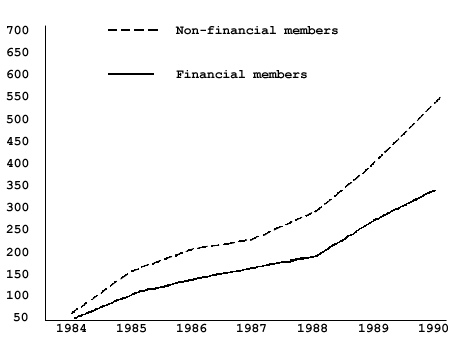
Chart of the membership pattern
Reasons for the increase in membership
The membership of FDPA has increased largely due to the setting up of its office in November 1988 and the acquiring of a full-time community worker and an information officer. With these, FDPA has been able to provide the following services:
- Conduct, with the assistance of ILO and the Ministry of Health, a survey to identify the number of disabled people within the main city boundary of Suva.
- Establishment of the Medical Fund, provided by the Australian Development Assistance Bureau (ADAB), to purchase medical equipment and medication that are not readily available locally or are too expensive for members.
- Establishment of the Housing Adaptation Fund, with funds contributed by the New Zealand Government, to assist FDPA members in making their homes accessible, e.g. by erecting a ramp, and installing a bath seat or rails. In order for members to avail themselves of this fund, they have to submit a formal application enclosing all pertinent information, including quotes and technical details. These would then be assessed by a committee and a decision would be made.
- Implementation of the Community Awareness Programme. This programme involves staff and members going to schools, tertiary institutions, social clubs and women's groups to give talks on disability issues. Under the programme, FDPA personnel participates in weekly 15-minute radio talk-shows. The FDPA community worker organizes workshops on disability issues for village health workers, health and educational professionals, and other persons who can play an active role in disability matters.
As a result of the services that have been provided in an effective way, there is no decline in membership.
Proportion of disability groups in FDPA
FDPA is an organization that consists of various disability groups. The percentage of people in the different types of disability groups is as follows:
- Cerebral palsy: 40%
- Paraplegia: 30%
- Visual impairment: 10%
- Quadriplegia: 10%
- Intellectual disability: 5%
- Amputation: 3%
- Hearing impairment: 2%
Proportion of women and men in FDPA
The FDPA has considerably more male than female members:
- Men: 60%
- Women: 40%
It is suggested that the preponderance of male members may be due to a supposed greater prevalence of disability among males arising from injuries.
Members' educational level
On average, members of FDPA have an educational level that permits them to read and write simple English. Members can be classified into the following categories:
- (i) Highest education level-University graduates: 1%
- (ii) Average education level-Primary school leavers: 59%
- (iii) Lowest education level-Special education : 40%
Members' skills
FDPA has members with disabilities who are law graduates, accountants, administrators, farmers, receptionists, typists, garment workers, packers, secretaries and trainees. There are also members who are professional entertainers and those who do domestic work.
The average weekly earnings of a member would be in the range of $F 30 to $F 40. This wage range is very low in comparison with the cost of living in Fiji.
In addition, many members are unemployed and are living either at home or in institutions.
Structure of FDPA
FDPA is registered as a charitable organization.
Decision-making
Decisions on policies and major issues are made at annual general meetings, during which members are given a full opportunity to discuss their views. The daily decisions of FDPA are made by its Executive Committee which meets once a month. A member of the Executive Committee is appointed Executive Officer, an unpaid position, to oversee FDPA office and staff operations.
Main activities
The main activities of FDPA, which also provide services to its members, are:
- Sports and social activities: FDPA views it as absolutely essential to organize sports and social activities for members, primarily as a means of communication and integration. These events have drawn many disabled people into joining FDPA and eventually helped them to want to live full lives again.
Sports training sessions and championships have brought out many members who would otherwise have remained confined to institutions or their own homes. FDPA has been able to send sports teams to represent the country in international championships, hence building FDPA and the individual morale of sporting members.
- Referral/resource activities: The office serves as a referral resource centre for people with disabilities, families, schools and business houses. Written and audio materials are available, although audio materials are limited. Occasionally, staff and members give counselling: The lack of staff makes it difficult for FDPA to meet fully the great demand for counselling.
- Independent Living Group Home: This programme is at present only provided to women members. The aim of the programme is to train disabled women in areas such as housekeeping, budgeting and care of body image. The ultimate goal is to help them live independently and become contributing citizens of their communities, return to their families or find alternative accommodation close to their places of work.
- Service group activities: The service group distributes medical equipment and devices, and funds for home adaptation to members who may request these.
- Tertiary studies: Upon the request of FDPA, the University of the South Pacific has enrolled members in its extension course programme. Hence, a large number of members are benefiting from this service and having another chance to continue their education. This service is provided free of charge.
- Outreach Programme: In this programme, the FDPA community worker works closely with health and educational professionals, village groups, women's clubs, etc., in identifying disabled persons and their needs and following up on whatever can be done to help them. This process involves a considerable amount of work with the families of people with disabilities.
Members' involvement
The involvement of FDPA members may be summarized as follows:
- (a) Involvement as supportive members - being ordinary members who support the work and ideals of the Association;
- (b) Service as committee members - serving on the subcommittees or
Executive Committee of FDPA and playing a more active role in decision-making, planning and implementation of activities; - (c) Creation of awareness by talking to colleagues and work-mates, going to public areas with the purpose of being seen by the public, talking to schoolchildren and to families of disabled persons. Each member can be involved in this activity and serve as FDPA public relations officers.
IV. Nature of FDPA Contact with Government and Other Agencies
Contact with the Government is through the Ministry of Women, Culture and Social Welfare. Whatever the FDPA may wish to discuss or seek approval for is channelled through the Director of Social Welfare of that Ministry.
The FDPA has direct contact with the following agencies:
- (a) Japan International Cooperation Agency (JICA);
- (b) Overseas Development Aid (ODA), United Kingdom;
- (c) Australian Development Assistance Bureau (ADAB);
- (d) New Zealand aid through the New Zealand Embassy at Suva;
- (e) Canadian International Development Agency (CIDA);
- (f) Disabled People's International (DPI).
Resources
FDPA's most valuable resource
FDPA views as its most valuable resource its members, families, friends and supporters. Without them, the Association would not have been able to achieve so much in such a short time.
Ways of mobilizing resources
To mobilize its resources, FDPA organizes an awareness week followed by a mini trade show on equipment and teaching aids used by disabled persons.
Week-long leadership/management training sessions of two hours each are organized. They involve volunteer specialists. The sessions are conducted after working hours. FDPA also refers members for training attachments or on-the-job training at non-government institutions or business firms.
Family days are organized for families with disabled persons to enjoy time together sharing experience, exchanging ideas and meeting disabled people who have established independent lives for themselves, i.e. have accepted their disability, hold regular jobs and in many instances raise families.
Contacts with sister organizations both locally and internationally are maintained to exchange news and resources, and encourage members to participate in seminars and workshops.
Lessons learned from experience in resource mobilization:
FDPA has learned that it is very important to share knowledge. Knowledge must not be confined to one person or place. In order to bring about a more even distribution of knowledge and skills, FDPA implements a policy that opportunities be rotated. For example, if FDPA receives an invitation to attend a seminar or workshop, it is the duty of the FDPA Executive Committee to select a person who has not had the opportunity to be exposed to whatever issues will be dealt with in the meeting and who would continue to work with the Association upon her or his return.
This policy is implemented to avoid over-dependence on one person. If that person were to leave the Association, it would be bereft of her or his skills and knowledge. Another reason is that when information and knowledge are confined to one person or a few persons, others are excluded. This exclusion greatly weakens an organization and could cause it to break up. These lessons have contributed to the progress of FDPA. FDPA hopes that the lessons will continue to be an influential factor in its development.
V. Major Difficulties Encountered and How These Have Been Overcome
The major difficulties facing FDPA are:
- Attitudinal: The "attitudinal block" that members often face is very frustrating. Although the community has been very helpful and responsive to FDPA calls for assistance, many people still regard disabled people as invalids who should be looked after at home or taken care of in institutions. Often, members experience the negative feelings and behaviour of families, friends and professionals. An attitude of pity and shame is common in the case of disabled children.
The involvement of government with FDPA is still considered low priority. Among professional bodies, employers and training institutions, the feeling prevails that disabled people would be an extra burden if taken into their respective organizations.
- Financial: As FDPA is a charitable organization, accruing funds would naturally be a major problem. It is at present heavily dependent on donations and overseas grants to maintain itself and provide for its work.
Efforts being made to overcome the problems faced:
- Attitudinal: Some progress is being made in the FDPA campaign to change attitudes. FDPA organizes social get-togethers to which members' families and friends are invited. Such activities are designed to raise awareness that disabled people need and can have a social life. Workshops are also organized with health and education professionals and employers in efforts to improve their attitude. A feature of its campaign was an awareness week during which members participated in radio talks, talked with the news dailies, and arranged exhibitions of medical equipment, orthopaedic appliances, and teaching aids. The FDPA Outreach Programme, which involves village and community workers, health professionals and the families of disabled people, has contributed greatly to its awareness campaign.
- Financial: At this stage, FDPA is still dependent on donations and overseas grants. Funds are also generated from fund-raising activities and membership fees.
V. To What Extent is FDPA Meeting its Goals
Short-term goals
- Membership drive: In this area, FDPA has done very good work . Its membership roll has increased over the six years since its establishment in 1984, and indications are that this trend will continue.
- Credibility: FDPA has managed to convince disabled people and the community at large that it is here to stay and will be the voice of disabled people in Fiji. This belief in its work is clearly shown by the tremendous support it has had from the local community and from overseas donor agencies.
- Community Awareness Campaign on Disability: FDPA has organized talks and seminars as well as an Awareness Week to create public awareness of the capabilities of disabled people. The response has been fairly reasonable. However, there is still much awareness work that remains to be done. It still has a lot of communities to reach out to, as well as the government, the private sector, schools and tertiary institutions, voluntary organizations, service clubs and families of disabled persons.
- FDPA office: FDPA has managed to set up an office with a staff of five, two of whom are part-time workers. It is appreciative of the Government of the United Kingdom which, which, through its donor agency, made it possible for FDPA to obtain an office, staff and a vehicle. Acquiring these resources has facilitated its work tremendously.
Long-term goals
- To change legislation: At present, FDPA has still not brought about any changes in policies or legislation; however, it has been advised to submit a paper in this regard.
- To form, with counterpart organizations providing services to disabled people, a national council that would serve as the advisory body to the government on disability issues. FDPA has been assured in the proposal for this council that disabled people would be equally represented.
- To improve social and economic well-being: This goal is, to a fair extent, being met with regard to members being able to meet medical needs from its Medical Equipment/Medication Fund, obtain funding assistance to adapt their homes, receive tertiary education as well as obtaining job training and employment for some of its members. however, there is still much work to be done.
- To conduct an outreach programme: This programme is progressing fairly well. Good contacts have been made with disabled people and the rural community in the area chosen for this programme. It is a major programme for FDPA. It will take some time and perhaps additional staff and funding in order to achieve its target in reaching all the disabled people in the community.
- To build a multi-purpose complex: There is no particular hurry to fulfil this goal as FDPA does not have the financial means to do so. However, if any opportunities should arise the FDPA would certainly explore them.
- To undertake self-help projects: Self-help projects have not as yet been developed, but FDPA hopes to implement them in the next five years. It may start with a small group of members making local wheelchairs, as it has been donated equipment to make wheelchairs and a number of its members have been trained to make the chairs. Market stall: The FDPA women's group is still exploring ways to set up a stall, perhaps starting at the FDPA office, selling sweets and craft work made by members. The income from these projects would be given to the members involved in the project.
With the acquisition of an office, FDPA has been able to strengthen its role, particularly as a resource centre and meeting point for its members and friends.
In the next five years, FDPA will channel its efforts to the following areas:
- Wheelchair workshop: FDPA would like to use its members' skills in wheelchair making and its equipment to set up a workshop for the production of wheelchairs. This would give a number of its members a source of income and a means of employment. This project would be initiated by the Association and, when well established, could be managed and owned by the workers.
- Self-help project: FDPA will explore ways and means to find a project that can generate funds. One way could be to go into partnership with possibly local or overseas investors in operating a service station, so as to achieve a degree of self-sufficiency.
- Community outreach programme - The programme would be extended to disabled people living in other areas; villages and community health workers in those areas would be involved in the outreach programme.
- Independent living home: There is a plan to set up an independent living training home for male members, similar to the one that exists for women members.
- Continuous work towards uplifting the social and economic status of members, through job placement, skills training, and tertiary studies programmes.
- Financial security to enable FDPA to continue operating its office and the programmes being provided.
- Continuous development of FDPA branches in villages and urban centres other than Suva.
VII. Involvement of Intellectually Disabled Persons and Psychiatrically Disabled Persons in FDPA
FDPA has no programme catering directly for intellectually disabled persons and psychiatrically disabled persons, nor does it plan its programmes to cater specifically for individual disability groups. At its stage of primary development, FDPA does not wish to divide its members into different disability groups. This could lead to a weakening of the organization, resulting in individual disability groups breaking away and forming separate groups. Furthermore, Fiji, being a small country, does not need to have too many national disability groups at this stage.
Meanwhile, FDPA could continue to include intellectually disabled persons in its activities, e.g. by inviting this group to sports competitions and social get-togethers, which are the activities that intellectually disabled members take part in whenever the opportunity arises. Only when FDPA is better endowed with resources to explore the potential of its intellectually disabled members can activities be planned that would include more for them this group.
Organization for people with intellectual disabilities
In Fiji there exists a charitable organization called the Society for the Intellectually Handicapped. The Society provides special education and vocational training programmes for a large number of children with intellectual disabilities. The Society is also involved in the formation of a national council for the disabled.
Registration
It is not too difficult to register a non-governmental organization in Fiji. When FDPA filed for registration as a charitable organization, it was required to do the following:
- (a) Write a letter to the Registrar of Titles informing him of its wish to be registered, enclosing the following information:
- (i) Name of office bearers;
- (ii) Address of organization and area located;
- (iii) The common seal of the organization;
- (iv) A copy of the organization's constitution;
- (v) The aims and objectives of the organization;
- (vi) A fee of 5 dollars for registration.
- (i) Name of office bearers;
- (b) The application took two weeks to process and a certificate of registration was sent after that period.
Philippine Experience in Promoting the organization of Disabled Persons on a Self-help Basis
By Ms. Aurora "Baby" L. Estrella, President, National Organization of Disabled Persons, Philippines, known in Tagalog as the Katipunan Ng Maykapansanan Sa Pill pinas Inc. (KAMPI).
The National Organization of Disabled Persons, also known as the Katipunan Ng Maykapansanan Sa Pilipinas Inc. (KAMPI), is concerned with promoting the organization of disabled persons on a self-help basis in the Philippines. The involvement of intellectually disabled persons and psychiatrically disabled persons in the organization is encouraged. KAMPI aspires to make society accurately aware of the needs of disabled persons, particularly those in the rural and urban poor communities in the Philippines.
1. Estimates of the magnitude of disability in the Philippines
According to World Health Organization estimates, 1 in every 7-10 Filipinos has some form of physical impairment. According to this estimate, there may be 6.3 million disabled Filipinos (based on the 1987 census). At present about 1 million of these are blind. According to the 1990 report of the Nutrition Foundation of the Philippines, the number is expected to double by the year 2000.
Of the 6.3 million disabled Filipinos, only about 2-3 per cent, or some 120,000 - 130,000, have access to rehabilitation services. Of the remaining 98 per cent that have no access, 80 per cent, or 4.5 million, live in rural areas, while 20 per cent, or 1.5 million, live in large urban centres.
2. Status of people with disabilities
In the Philippines, the rejection, isolation and lack of concern for people with disabilities has a long and deeply discouraging history. Doors to opportunities for education, employment and activities in society in general were closed to most if not all disabled people. Often, they were rarely seen in public places because it was too difficult, if not impossible, to get to most of these places. Society was never much aware of disabled persons since they were hardly visible. Most families, especially in rural areas, perceived a disabled family member as a curse and tended to hide him or her in the confines of the home. A decade ago, employment opportunities for disabled people were non-existent. Today, opportunities are still very scarce. Moreover, they are likely to be discriminatory if not exploitative.
The magnitude of the problem is illustrated by the following. In Negros Occidental:
- There is only 1 physical rehabilitation doctor in the entire province. It is impossible for one physiatrist to oversee the rehabilitation needs of 300,000 disabled Negrenses.
- There is the problem of uneven distribution of rehabilitation centre and health unit services, most of which are located in urban areas; rural people have no access to those services because of the long distances and difficult terrain that have to be travelled and the transport costs involved.
- Traditional institutions in the province, which concentrate on functional training, lack appropriate programmes for the social and vocational integration of people with disabilities into society.
- Technical aids, when available, are either expensive or not appropriate for rural conditions.
- Cost of services in institutions are staggering and beyond the reach of the majority of disabled persons, who belong to the lower economic strata of society.
- In employment, disabled Filipinos find themselves having to compete with their non-disabled counterparts.
Disabled Filipinos, rich and poor, face strong attitudinal barriers. They are perceived as dependent users and not givers of services. For this reason, many undertakings by government agencies and NGOs, local and foreign, are usually built around hand-outs rather than self-help and meaningful livelihood entrepreneurship. This has perpetuated a sense of dependence among disabled Filipinos and prevented them from becoming productive members of society.
Despite the desire of many local and foreign agencies to help in total rehabilitation efforts that open up equal opportunities for disabled persons, many ongoing programmes are at best at the pilot stage of implementation and have not achieved the impact desired.
Filipinos with disabilities have to cope with enormous problems associated with an inaccessible environment, which seriously curtails their integration into the mainstream of society.
3. Birth of a national organization
Initial attempt - 1983
Following the celebration of the International Year of Disabled Persons in 1981, the Government of the Philippines, through the then National Council concerning the Welfare of Disabled Persons, convened in 1983 the first National Congress of Disabled Persons. The Congress established the first national organization for disabled persons. However, it did not fully succeed, for the following reasons:
- (a) The members of the governing board were based mostly in Manila (it was centrally governed);
- (b) The organization had no support framework, i.e. funds, office, communication facilities and staff;
- (c) Unity among members of various disability groups could not be achieved and factionalism and conflict of interests prevailed.
Owing to the above, no major programmes were launched by the organization, which eventually led to loss of interest among its members.
In 1987, the National Council for the Welfare of Disabled Persons (NCWDP), an agency attached to the Department of Social Welfare and Development, re-emphasised the need for more serious participation of disabled persons in policy formulation and implementation of the projects that affected their welfare. In the third quarter of 1989, there was heightened concern over the absence of a national body that could champion their cause, bring to light an accurate awareness of the need of disabled persons and provide an effective voice for articulating their needs. Discussions with the then Executive Director of NCWDP, Attorney Art Borjal, were initiated by the Association of Disabled Persons of Negros Occidental. In April 1990, preparation for a second National Congress of Disabled Persons was under way.
Establishment - 1990
As a result of the initial efforts made by the Association of Disabled Persons of Negros Occidental, a group of provincial leaders met and decided to make another attempt to organize at the national level.
The Federation of Disabled Persons in the Philippines, known in Tagalog as the Katipunan Ng Maykapansanan Sa Pilipinas Inc. (KAMPI), was established in July 1990 by the Second National Congress of Disabled Persons. Represented in the organization are people with orthopaedic disabilities, those with sight-impairment, those with hearing-impairment, persons with general learning problems (represented on the Board of Governors by a parent) , and the negative hansennites.
In the organization of KAMPI, the following were the major situational constraints:
- (a) Philippine provinces are separated by islands; contact among members is likely to be difficult and expensive;
- (b) The organization has no financial support and will thus be operating with the minimum of resources during the next three to five years;
- (c) Most chapters have not been organized; most members of the national body will thus initially be individuals rather than organizations;
- (d) The government is not in a position, at least for the time being, to provide a permanent secretariat to support the national organization;
- (e) Initially, 80 per cent of KAMPI members are expected to be people with orthopaedic disabilities and blind people, as these comprise the most organized groups and therefore the most identifiable of the disability sector. Other disability groups will have to be sought and encouraged to join the organization.
Given the above constraints, KAMPI, at the present stage in its development, operates primarily through leaders who are dedicated, committed, serious and willing to provide personal resources in terms of time, talent, money and social and political influence.
Communication is considered a vital key to success. Management is essential carried out through information collection, dissemination and feedback, referendum and letter writing.
Meetings of the Board of Governors will not be held only in Manila. They will be held on a rotational basis on the islands of Luzon, Visayas and Mindanao, or wherever there are important issues to be taken up. There are three Area Vice-Presidents for the disability groups of the three islands, whose task is monitoring, coordinating and supervising KAMPI activities, as well as providing advice.
Financial viability is a major concern. Budgeting is thus undertaken on the basis of "less cost and maximum return". A ways-and-means committee works at developing ingenious and creative ways to seek funds. An intensive media campaign is conducted to establish the identity of KAMPI and enhance its credibility in order to succeed in fund-raising.
4. Organizational structure and membership
The structure of the new organization is illustrated in chart 1. The governing and decision- and policy-making body is a 15-person Board of Governors. There are 14 representatives, one from each of the 14 political regions of the country. The fifteenth member of the Board of Governors is a representative of people with general learning problems. The President of KAMPI is elected by the Board of Governors to serve for a two-year term.
The basic units of organization of KAMPI are its provincial-level chapters. Provincial chapter membership consists of municipal / town chapters, and sectorally organized chapters / associations. They have their own articles of incorporation and are autonomous in the planning and implementation of their programme and project activities. They elect their own officers and collect membership dues. Provincial chapters meet independently within the region during a biennium and elect a regional president who sits on the Board of Governors of KAMPI.
The membership of KAMPI will be provincial chapters to be established in provinces all over the country. In the establishment of provincial chapters, core groups of working disabled persons in the provinces are identified and invited to serve as a nucleus for the formation of provincial chapters. Three representatives of the provincial chapters attend the regional congress held every two years. In this manner, they participate in decision-making and in the election of the President of KAMPI.
| National Level | BOARD OF GOVERNORS - 15 Members
2-year term of office Elected by KAMPI GeneraL Assembly *Asst. Treasurer - appointed |
NCWDP |
| Evaluation/ Monitoring Group |
NORFI - Sectretariat | |
| Regional level | REGIONAL COUNCILS (13)
|
RCWP |
| Provincial level | PROVINCIAL ASSOCIATIONS
|
COUNCIL OF ADVISORS INTER-AGENCY COMMITTEE NGO/GO |
With the establishment of disabled people's organizations in the provinces, people with disabilities will have a greater chance of being heard by community leaders, have a greater impact in lobbying for their rights and needs, and provide inputs into the proper planning of existing government and NGO disability-related programmes. At the grass-roots level, organizations can, in turn, implement national programmes within the context of their own situations.
Although KAMPI was organized only in July 1990, the response to its call for membership has been unexpectedly fast. It has 75 card-bearing members from the 14 political regions of the country. These members attended the Second National Congress that established KAMPI. Eleven provincial chapters have been organized and three sectoral organizations (different disability groups) have affiliated and joined initial KAMPI activities. Each member of the Board of Governors is required to organize her or his own provincial chapters or groups to affiliate with KAMPI.
A key factor in the growth of KAMPI is the involvement of working professionals with disabilities, and their families in the leadership of the organization, to which they contribute material resources and time.
5. Objectives and activities of KAMPI
Objectives
The development objectives of KAMPI are to:
- Establish a united national network of associations of disabled persons;
- Participate effectively in both government and non-governmental efforts to promote the rights of people with disabilities;
- Ensure proper representation in the formulation and implementation of policies and programmes that facilitate access to opportunities available in the community, with a view to their productive integration into society.
Specific objectives:
To achieve the above, KAMPI has the following specific objectives:
- (a) Establish a nation-wide disabled people's organization that effectively networks projects, services and information;
- (b) Strengthen the national network of disabled organizations through leadership training;
- (c) Create a strong national movement that will make society aware of the problems, needs and rights of people with disabilities;
- (d) Advance the status of disabled persons through implementation of national and local programmes that serve their needs;
- (e) Disseminate information through the President's bulletin, updated every two months, schedules of provincial, regional, national and international activities, a quarterly news update on organizational build-up, and projects that are in the pipeline.
Activities
To achieve the above objectives, KAMPI pursues a programme of activities that involves organizational build-up of provincial chapters, leadership development through training, and service assistance and referral networking. Fund-generation and advocacy campaigns will be a year-round activity.
Organizational build-up of provincial chapters
Every national officer of KAMPI is involved in the organization of provincial chapters, particularly the identification of core provincial leaders and mobilization of the involvement of local government officials in the establishment of new chapters. Whenever a provincial chapter is set up by KAMPI, the mayor is always invited to the first assembly to seek his or her support for involving disabled persons in provincial development councils and monitoring committees for the construction of new buildings and facilities.
In some provincial chapters, representatives with disabilities sit in the provincial or city councils (the law-making bodies in a province or city) and are provided the regular amenities due to a council member.
The programme thrust of KAMPI for its first biennium is the establishment and strengthening of all 87 provincial chapter affiliates, as well as the conduct of human resources development programmes and an intensive media campaign on its activities.
Leadership training
One reason many disabled people's organizations are weak or become dormant associations rather than strong lobby groups is because their leadership has had no training in governance. It is important for the leaders of these organizations to acquire basic knowledge on management, decision-making, communication skills, cooperation and teamwork, programme planning, convening and running of meetings, and ways of working effectively through committees.
KAMPI has initiated human resource development workshops and leadership enhancement seminars to help its chapters mobilize available resources and expertise in their communities.
At present, KAMPI is seeking funding to establish a national officers' training school that will provide leadership training for its members that is tailored to the needs of individual and town chapters. The purpose of this is to enable the provincial/town chapters to manage their organizations effectively and strengthen the grass-roots chapters of KAMPI.
Service and referral system
In order to encourage collective participation and cooperation among all organized groups, KAMPI has embarked on providing the following service assistance to its members:
- Free medical and legal assistance by KAMPI medical doctors and lawyers.
- Referrals for job placement and for livelihood opportunities.
- Loan assistance for purchase of appropriate technical aids and appliances.
- Award of educational scholarships: KAMPI seeks sponsors for deserving young people with disabilities by submitting scholarship proposals to sources it has identified. Criteria for selection are furnished to provincial chapters which, in turn, recommend candidates. Final selection and evaluation are conducted by a screening committee on the Board of Governors. Since its organization in July 1990, KAMPI has awarded 5 scholarships and 25 sponsorships from local educational foundations and benefactors.
- Channelling of technical aids and appliances: KAMPI serves as a conduit for donated wheelchairs, crutches and other technical aids and appliances to its members. The newly affiliated chapters have been recipients of such items. They have, in turn, channelled these donations to indigents in their areas, including those who are not members of their chapters.
Chart 2
KAMPI SERVICE AND REFERRAL NETWORK SYSTEM DIRECTORY OF HELP/MANAGEMENT SERVICES BY REGION/PROVINCE/CITY
- Medical surgical services:
- Diagnosis
- Assessment
- Drug treatment
- Surgical correction
- Extended rehabilitation services:
- Physical, occupational and vocational therapy Prosthetic/orthotic
- Financial support services:
- Capital loan assistance
- Self-employment assistance
- Contract labour
- Placement
- Sponsorship
- Financial support services:
- Special education services:
- Disability assessment
- Special education
- Integrated schooling
- Small home
- Adult education
- Non-formal education
- Special education services:
- Placement and vocational service:
- Skills training
- Social welfare application
- Guidance and counselling
- Sheltered workshop
- Self-employment assistance programme
- Placement and vocational service:
- Sports, recreation and other related social services:
- Value formation
- Cultural shows
- Child-to-child activities
- Recreational activities/family day
- Mini-olympics
- Leadership skills development
- Talent development
- Independent living skills
- Sports, recreation and other related social services:
- Provision of technical assistance: KAMPI provides the chapters with technical assistance in resource generation, formulation of project proposals and programme planning.
- Sponsorship of events and competitions: KAMPI encourages and sponsors symposia, essay contests, cultural shows and sports events, to develop the talent of its members and provide them with avenues for creative expression.
In addition to the above, KAMPI has a service and referral network system in specific areas from which disabled persons can obtain help. The referral network
system is illustrated in chart 2.
Promotions and campaigns
To create social awareness of its needs, KAMPI organizes advocacy campaigns and follows up on government action on its proposals. Efforts to strengthen implementation of the accessibility law is among its major activities. At present, KAMPI is involved in working this out through additional legislation and by persistently working with governmental bodies responsible for implementing and monitoring the implementation of the law.
KAMPI and the Government
Registration
As a non-governmental organization, KAMPI is registered under Philippine law and is governed by the rules and regulations pertaining to private non-profit organizations. Its activities are thus regulated by the Securities and Exchange Commission of the Department of Finance.
No difficulties were encountered in complying with the requirements for registration.
Relationship with governmental bodies
In spite of its non-governmental status, KAMPI maintains strong ties with the Government. This relationship is necessary for KAMPI to operate funds, and gain access to the political and regulatory bodies responsible for formulating and implementing the laws that can facilitate achievement of KAMPI objectives, especially for an accessible environment.
NCWDP, under the Department of Social Welfare, is the main government body that coordinates programmes for disabled persons. KAMPI is a Board member of NCWDP. In this manner, it may seek funding for specific projects, coordinate its activities with existing government projects and participate in the formulation of government programmes for disabled persons.
In the national legislature, KAMPI sits in on all the deliberations of the House of Representatives and the Senate concerning the formulation of national legislation for the advancement of people with disabilities. The Magna Carta for Disabled Persons is among the major bills at present under active deliberation in the Philippine Congress.
At the provincial and city levels of government, chapter members of KAMPI are also involved in coordinating and implementing projects for disabled persons. Whenever a provincial chapter is set up, accreditation of the chapter by the regional office of the Department of Social Welfare is sought. The strength of response of local government officials is not the same in all provinces, but where cooperation is strong the implementation of projects is exceptionally successful.
This is illustrated by the experience of a KAMPI chapter in Cebu City called Handicapped's Anchor is Christ Inc. (HACI). HACI is an association of, for and by orthopaedically disabled persons in Cebu City. One of its aims was to transform Cebu into an accessible haven for orthopaedically disabled people. HACI undertook the responsibility of seeking the implementation of BP 344, better known as the Accessibility Law.
The efforts of HACI involved coordinating with the Organization of Rehabilitation Agencies and the Regional Council for the Welfare of Disabled Persons and obtaining the full confidence and support of the Mayor of Cebu. It also involved other government offices, e.g. the Philippine Tourism Authority, the Land Transportation Commission and the Philippine Amusements and Gaming Corporation (PAGCOR), which was tapped for funding.
Through thorough planning, coordinating and monitoring, HACI succeeded in accomplishing the following for people with disabilities in Cebu City:
- HACI is a member of the Cebu Office of the Building Official (OBO), in which it serves as Building Plans Analyst for Accessibility.
- Six HACI members, together with five members o£ the Safety organization of the Philippines, are officially deputed by the Mayor of Cebu to serve as building inspectors for OBO. Special identification cards are issued by City Hall for this purpose and the committee members carry these cards every time they go on regular inspection of newly constructed and renovated buildings.
- These inspectors, who form the Accessibility Monitoring Committee created by the Mayor, have discretion over the approval and disapproval of building permits. The Committee meets on the first Monday of the month at City Hall to discuss problems such as violations by architects and building owners, spot "grey areas" of the law, and find ways and means to be more effective in proper implementation of the law.
- Cebu City's major tourist spot, Plaza Independencia, is one of the most accessible parks in the country.
- People with disabilities in Cebu can find more buildings and places bearing the international symbol of access.
- Eighty-five per cent of the major form of transport in Cebu, the jeepney, bear the international symbol. A sticker on those jeepneys requests non-disabled front seat passengers to vacate the seat and transfer to the back, if space allows, if a disabled person wants a ride.
The experience of HACI is an example of what a self-help organization can accomplish if it has members who can move a responsible government to allocate the time and authority to accomplish a worthy task.
KAMPI strengths and challenges
The most valuable resource of KAMPI is its personnel, and their commitment, creativity and leadership for identifying and implementing projects and organizing people with disabilities to fight effectively for their own rights.
Its greatest challenge is to locate and expand the personnel in different parts of the country and to build it into a critical mass. In locating personnel, KAMPI experience shows that it can be more successful if it seeks the help of civic clubs, village leaders, government agencies and church parishes. Many disabled persons in a town or province are indigent. What is needed, however, are leaders who will support the organization and ensure that its work reaches the large numbers of disabled persons listed by the Church and the Government, and who represent those most disadvantaged by poverty, social attitudes and customs.
Building the skills base of KAMPI is not an easy task, especially among people who have so far had little opportunity to develop their capabilities fully. The absence of a regular and adequate source of funding to support the day-to-day operations of KAMPI poses a big challenge. It also means that the KAMPI human development programme should be independently funded so that it can be pursued regularly until the needed critical mass of personnel and leadership have been obtained. Training personnel to fulfil their responsibilities is critical to the implementation of projects and to sustaining the organization's growth over the long term.
Identifying projects that will accomplish the most in helping disabled persons to become productive members of society is also a major task and one which demands the most creativity from KAMPI leaders. In this regard, it is essential to steer clear of hand-outs and implementation of projects in ways that tend to alienate disabled people from society.
The history of disabled people in the Philippines contains both success stories and failures. There has been success when the leadership has been creative, patient and committed. Failure has resulted when the leadership has not been strong enough to overcome the tendency towards factionalism and narrowmindedness.
The challenges are great because compared with other organizations the leadership and members of KAMPI have to face the following:
- (a) A society unaware of the real needs of people with disabilities;
- (b) An environment that is inaccessible, greatly exacerbating the difficulties in the midst of which the disabled leaders of KAMPI have to work;
- (c) A large poverty base: as the majority of disabled persons are poor, they cannot pay even a token membership fee of 20 pesos per year to support the organization.
While the challenges are great, its rewards are greater. The KAMPI experience over the past six months indicates these rewards are within reach, but they require a great deal of continuous work and personal commitment
Involvement of persons with general learning problems
During initial discussions On the conduct and objectives of the national body that would be organized, it was decided to include persons with general learning problems, and the negative hansennites. It was believed that the new national body had to advocate for the improvement of the quality of life of all disabled persons within a broad framework so that it could seek opportunities for them and ensure that society and policy makers responded positively to them. It was decided that representation for this sector would involve a parent/relative. A seat on the national organization's Board of Governors is specifically mandated for this sector.
The Community-based Rehabilitation Programme of the Negros Occidental Rehabilitation Foundation, Inc. (NORFI), a WHO collaborating centre, has considerable experience with regard to the development, involvement and participation of persons with general learning problems. In the past, there had been very little progress in the development of services for slow learners owing to the lack of understanding, information, education and communication programmes. To date, government services are few and fragmented. There is a dearth of leadership for the planning and development of comprehensive programmes that emphasize the trainability of persons with general learning problems. The government assistance programme for this sector had concentrated on medical management rather than social integration and skills training.
All too often, society treated people with intellectual disabilities as freaks and denied them their rights.
In 1986, a group of young professionals in Negros Occidental decided to work together as Volunteers for the Rehabilitation of the Disabled (VRHD) to train disabled children and young adults in skills that could provide them with a little pocket money. They initiated a Saturday workshop that was frequented by students of the local special education centre, the City High School integrated programme, and by disabled persons who lived in nearby barangays. The volunteers taught handicrafts, basket weaving hair cutting, sewing, papier mache, embroidery etc. Later, those who had acquired better skills went on to do machine or hand knitting. Some volunteers taught interpretation dances and sign-language singing to people with hearing impairment. Those with general learning problems also attended talent development workshops, such as balancing, dancing, Hawaiian dance, native folk dancing and skit performance, and sports. The Saturday workshop continues to this day and has been the venue for the development of talent and skills, and socialization of people with disabilities in the province.
The cross-disability group are mostly members of the Association of Disabled Persons. Students participate as auxiliary members.
Many members have obtained loans for their own small business enterprises and accept work, especially during off-season months. The slow learners within this group are always asked to perform in cultural shows for city and provincial functions and civic club programme. Every year in July, the Association of Disabled Persons, in cooperation with NORFI and VRHD, sponsors a mini olympics in which people with intellectual disabilities compete in events for all disability groups.
Socialization and talent development are the two areas to which KAMPI has addressed itself in terms of involvement of intellectually disabled persons. With the inclusion of this group in the planning and implementation of national programmes, especially in awareness-raising and advocacy, KAMPI hopes to obtain the full participation of intellectually disabled persons and the cooperation and active involvement of their families.
One major achievement for this disability group after KAMPI was formed was the interest shown by a group of university professors to publish "Self-instructional materials for parents of the mentally disabled". Through the KAMPI referral network, the publishing and printing costs of this valuable material are being met.
In August 1990, the NWDP proposed the creation of an inter-agency committee on mental health. This body will promote coordination and collaboration and strengthen linkages among service providers and experts on mental health for the prevention and rehabilitation of mental disabilities as a result of mental and emotional illness or accidents.
This move was deemed necessary to forge a partnership between government and private agencies in the development of mental health programmes to better serve and meet the needs of this disability group. KAMPI has expressed interest in being represented on this inter-agency committee.
To date, the Council has three inter-agency committees undertaking consultative, advisory and coordinating work on all matters pertaining to disability prevention, rehabilitation and equalization of opportunities. Accessibility promotion is a major area of its work.
In the entire country, there are only a handful of private and public schools servicing the needs of people with intellectual disabilities. With the incidence of intellectual disability projected to increase yearly, more problems are expected to be encountered. KAMPI is at present lobbying for legislation that will require the government to set up special education centres in every municipality and provide staff who can creatively help to train intellectually disabled persons. A proposed piece of legislation is being studied to encourage the setting up of sheltered workshops in areas where there is an ongoing community-based rehabilitation programme, to improve mental progress and individual achievement of this group.
One of the greatest challenges of the national body is integration of mentally disabled Filipinos in KAMPI and Filipino society. In this regard, the example of Gerry M. may contain some lessons. Gerry has Down's syndrome. He is 27 years old but has the mentality of a seven year-old. His family always treated Gerry as a member with special abilities and needs. Gerry trained to be a physiotherapy aide at NORC, where he now works as a paid staff member. Gerry had had opportunities opened to him. How many could have achieved what Gerry has if only there were the right opportunities, family attitudes and society's concern?
The National Association of the Deaf in Thailand
By Mr. Hakan Collin, Organizational Adviser, The Swedish Deaf Project for Organizational Support to the National Association of the Deaf in Thailand
Present situation of deaf people in Thailand
Anyone can be affected by deafness, at birth or later on in life. One can become deaf at birth due to an injury at the time of delivery. One can be born deaf if one's parent is a carrier of deafness, a hereditary disposition. In childhood, small children can become deaf owing to diseases, e.g. meningitis or rubella. Elderly people can become deaf as a result of exposure to high noise levels or because of advancing age.
Children who were born deaf or become deaf owing to disease may attend special schools to learn language and other subjects in order to take care of themselves in society. Such schools are responsible for giving those children two languages: sign-language and reading and writing language. As sign-language does not have a written version, deaf people have to learn the other language, Thai language. But their first language is sign-language.
All deaf people communicate by sign-language, a visual language, as they lack the aural language. Deaf people may learn how to speak, but not all of them can manage to do so properly. Deaf children can learn how to speak with explanation through sign-language. How well they can manage to speak depends on their natural ability.
Sign-language is an important language for deaf people through which they can acquire knowledge at school, communicate among friends and conduct business with adults, both deaf and hearing people. It is essential for deaf children to have the opportunity to identify themselves with deaf adults in society.
After finishing their education in those special schools, deaf young people face the question of "what to do?" In Thailand, there is no real vocational training school for deaf and hearing-impaired people. Nor is there an institution for tertiary education for them, although many would like to continue their studies to enable them to enter a good profession in the future. Education at university level is not accessible to them. Unfortunately, the Thai sign-language is not yet recognized by the Thai authorities. Being deaf and not having sign-language interpretation services handicaps communication. At the same time, hearing people are also handicapped if they do not know sign-language when they need to communicate with the deaf community.
Parents have to arrange for their deaf children to be employed, usually in a private company. Most of them are working in their parents' companies (if they have one) or in their friends' companies. The special schools also try to help their deaf graduates get jobs. Some of the more intelligent deaf people can manage on their own. Most of them, however, are unemployed.
It is not easy for deaf people in society as their disability is not immediately evident. Hearing people often think that deaf people are like themselves, as they can walk and take care of themselves. When hearing people realize that there are obstacles to talking with deaf people, they first think that deaf persons are stupid. That is why deaf persons are vulnerable in society.
Blind and orthopaedically disabled people do not have the same problem. As they can speak, they obtain help easily from non-disabled people and they can also use the telephone themselves. In some countries, deaf people can make telephone calls themselves using advanced technology in the form of text telephones. Even deaf and hearing people can call each other as there are service centres conveying their telephone conversations.
However, the situation for deaf people in Thailand is different. There are deaf people living in different parts of Bangkok and the whole of Thailand. They have little or no help to pass on messages to deaf or hearing friends or relatives by telephone. They have added expense for travel, telegrams and telephone calls to convey their messages. Deaf people cannot always ask hearing people to call for them when they want to convey a message properly. Sometimes they do not want to convey a message concerning personal matters through any person who happens to be around.
In Thailand, there is a mutual-help organization of deaf people: the National Association of the Deaf in Thailand (NADT). NADT is the main self-help organization of Thai deaf people.
Case-study
The postal address of NADT is: 34/1 Sukhumvit 51, Bangkok 10110, where Silent World Craft is located. Silent World Craft is a NADT workshop which produces wooden handicrafts. The employees there are deaf persons. NADT office is located at 614 Ding Daeng Road, Samsenai, Phayathai, Bangkok 10400, Thailand.
Establishment
On 21 July 1969, former pupils of schools for deaf people created a small club called the Centre of Alumni of Schools for the Deaf. Subsequent to that, a volunteer working at the School for the Deaf, where the Deaf Club was located, noticed that the Club did not have control over the use of profits derived from the sale of handicrafts made by members. The volunteer then assisted the members of the Club in setting up their own national association of deaf people in Thailand, separately from the School. He arranged a study tour to the Philippines for a group of deaf Thais so that they could observe and reflect on how to establish their own organization. Thus the National Association of the Deaf in Thailand was established on 23 January 1983.
Goals
The long-term goals of NADT are to:
- Develop unity among deaf people and to act as a centre for them;
- Develop rights and benefits for deaf people;
- Promote vocational skills and support for members;
- Exchange knowledge, experience and ideas between deaf people and society at large;
- Promote the advancement of education for deaf people;
- Promote cooperation among various international organizations of deaf people and other disabled people.
The short-term goals of NADT are to
- Address the issue of membership development: NADT plans to interview deaf former members as well as non-members to find out why some deaf people are still not members or why some do not want to become members; NADT aims to face these problems by introducing the necessary changes so that it can be a more effective organization.
- Arrange more sign-language courses for hearing people: in 1990, the NADT held sign-language courses in different locations, e.g. at a hospital and at the Department of Public Welfare. One course is arranged for interested hearing members of the public. NADT views such courses as important means of disseminating knowledge of Thai sign-language and improving attitudes towards deaf people in society.
- Prepare and plan for a Thai sign-language interpreter education programme such a programme does not exist as yet. It is essential that it be developed to help meet great need among deaf people for a sign language interpretation service.
- Inform and give members knowledge and experience of organizational management to enable them to run their own organization.
Gender balance of membership
There are four Regional Deaf Clubs affiliated to NADT. The Bangkok Deaf Club has 479 deaf men and 252 deaf women members. In addition, 50 persons are hearing members. The Deaf Club in the north has 81 men and 39 women members; two members are hearing persons. The East Deaf Club has 74 deaf men and 44 deaf women members, and two are hearing members. In the Southern Deaf Club, there are 90 men and 48 women registered as members.
Educational and skills level
On average, NADT members have had about 4-8 years of schooling. While NADT knows of one deaf member and two other deaf persons who are university graduates, many deaf people have not been to school at all or they have only attended one year of primary school.
The large number of deaf people in Thailand who have never entered a school are terribly isolated and have very limited contact and communication with other people. They are very hard to reach and do not have the same ideas as those who have been to school. This has significant implications for the development of a united deaf community. Most of the deaf people who have been to school and who use Thai sign-language are NADT members.
The members have a high level of handicraft skills. They are especially skilled in art, dress-making and carpentry.
Legal status
NADT has legal status with the Police Authority and the National Cultural Council under the Ministry of Education.
Decision-making and participation
Decisions are made at Board meetings. Unfortunately, until mid-1990, two hearing persons dominated the decision-making process at the expense of the autonomy and involvement of deaf members. The situation was changed through the intervention of the NADT's deaf organizational adviser. Now, decisions are made by deaf members themselves.
When activities are arranged, very few attend. Usually there are information meetings and members' meetings once a month. Most of the members remain passive. Those who are active are the Board members.
NADT arranges national, regional, and local-level training courses for members and Board members to strengthen their skills in decision-making and organizational management, and to underline to all members the importance of participation in HALT through peer support and solidarity. The training courses emphasize to members that all these are strengths to be developed in the task of changing society's negative altitudes towards deaf people, so that they will be treated with dignity and their inability to hear will not be held against them.
Services
The membership service is designed to assist members in resolving problems at home or in the workplace. when deaf people have a lot of questions and doubt about particular matters, they may turn to the membership service to seek advice from other deaf people who can easily understand them and recognize the situation they are in. Some companies contact NADT and offer jobs to deaf people, which the membership service handles. This service also places job vacancy advertisements in the NADT Newsletter.
Two sign-language teachers teach hearing people who are interested in sign-language. They teach at different places, or hearing people come to the NADT premises to be taught there. Both teachers also teach deaf people who want to learn more Thai language and other subjects.
The best way is for deaf people to teach their deaf peers, as they can understand their background and thinking. This type of peer teaching facilitates the development of deaf people, particularly through their use of Thai sign- language.
The Newsletter/Video Unit is responsible for the production of a newsletter that disseminates news about deaf people in Thailand and elsewhere in the world. It also provides information about meetings, job vacancies and other items of interest to deaf people. The newsletter is forwarded to members six times a year. Many deaf people cannot read the newsletter very well. The NADT plans to record in video-cassette form the contents of the newsletters to enable all deaf people to have the same possibility of receiving information. While the Newsletter is sent to all members on the NADT mailing list, a video-cassette of each issue of the newsletter will be sent to each regional deaf club.
Contact with government agencies and NGOs
The government agency with which NADT has most contact is the Department of Public Welfare. Recently, a new division, the Division for the Handicapped, was created at the Public Welfare Department. It is expected that NADT will cooperate even more with this Division.
NADT is in frequent contact with the Council of Disabled People of Thailand and the Council of Social Welfare. The Christian Foundation for the Handicapped in Thailand as well as the Asia-Pacific Federation of the Deaf and the World Federation of the Deaf are also organizations with which NADT keeps in contact.
Resources
The most valuable resource of NADT at present is the Swedish Deaf Project, which gives support and knowledge on organizational matters to deaf Thais. The Project provides financial and administrative assistance. It is implemented by the Swedish Organization of Handicapped International Aid Foundation (SHIA) and the National Association of the Deaf in Sweden (SDR). The Project has made available to NADT the services of an organizational adviser, who is himself a deaf person. Deaf Thais view this as being of great value and importance. Many obstacles and misunderstandings have been solved and explained by the organizational adviser, whose overall task is to assist his Thai deaf peers in developing themselves and their organization.
NADT affiliation and cooperation with the Council of Disabled People of Thailand is also of enormous value. Through this, deaf Thais have received opportunities for self-development and the creation of good contacts with the authorities.
Goal problem
There is a lack of basic general knowledge among many deaf people in Thailand. Therefore, it is very difficult for them to understand everything when attending courses and meetings. The deaf people here have always been too dependent on hearing persons. There has been a tendency to let hearing persons take responsibility on their behalf. Afterwards, they have realized that this is not a solution.
The organizational adviser has emphasized the need for deaf persons to assume responsibility, an area that needs to be developed among all members if the organization is to grow in strength.
As the members' knowledge is still rather limited compared with their tasks, and the organization is not yet sufficiently strong, it will take a long time for NADT to achieve its goals. It is advisable for the organization to develop its own capacity step by step, rather than hurry too much and suffer the consequences of impatience.
Members' aspirations
The aspirations of NADT members for the near future are:
- To build a house of their own;
- That deaf people will be accepted in society;
- That the Rehabilitation Law for Disabled People in Thailand will be approved by the Government;
- That the Thai sign-language will be officially recognized as the mother tongue of deaf people of Thailand.
- That a professional sign-language interpreter service will be provided to deaf people in Thailand.
By Mr. Wiriya Namsiripongpun, Chairman, Council of Disabled People of Thailand
Background
The Council of Disabled People of Thailand is the Thai national chapter of DPI. Before its establishment, there were various organizations of disabled people working individually in different ways. There was no coordinating organization to consolidate or to represent the disabled people in negotiations with the Government. At that time, neither society nor the Government viewed disability as a serious social issue. People with disability were ignored by their own society and the Government. Thai disabled citizens did not enjoy the same rights and privileges as non-disabled Thai citizens. Nor did they have the opportunity to take part in social activities. Without the unity of a formal organization, disabled people in Thailand lacked the power to fight for their rights.
Following the International Year of Disabled Persons (1981), the Council of Disabled People of Thailand was founded on 20 October 1983. The Council was organized by Mr. Narong Patibatsorakit and a small group of disabled people who had been inspired to undertake this task after attending the Disabled Peoples' International Assembly in Singapore in 1981.
The first Conference of the National Assembly of Disabled People was convened at Chiang Mai from 20 to 23 October 1983. Participating in that Conference were representatives with disabilities from all over the country as well as representatives of government agencies and non-governmental organizations. Groups of people with all types of disability joined together with a common bond to form the Council.
Over the past eight years, the Council has stood for the common interests of disabled people in Thailand. Disabled people now speak with one voice in their fight for equality and in pursuit of legislation that will guarantee them legal rights. Yet, there is no permanent office of the Council. The temporary office of the Council of Disabled of Thailand is at 413/45 Arun-ammarin Road, Bangkok-noi, Bangkok 10700.
Purpose and objectives
The Council of Disabled People of Thailand focuses its purpose on three issues. First, it aims to propose legislation which provides for disabled people to have the same rights and privileges as non-disabled people in society. Second, it seeks to educate the public on the subject of disability that will lead to understanding and equal relationship among Thai people. Finally, it makes every effort to promote the social status of disabled people.
The Council implements its work based on the following objectives:
- To seek and propose legislation and regulations that will benefit all disabled people in Thailand.
- To counter all legislation and regulations which are disadvantageous to or discriminate against disabled people.
- To provide information about disabled people to society.
- To support every step towards rehabilitation for all disabled people in Thailand.
- To secure for all disabled people of Thailand equal access (physical and legal) to proper education.
- To ensure equal opportunities for all disabled people of Thailand.
- To cooperate with other organizations whose objectives are complementary to those of the Council.
- To avoid profit-making and involvement in politics.
Membership
There are three kinds of members in the Council: ordinary members, associate members and honorary members.
ordinary members are:
- Executive committees of the various national associations of disabled people such as blind people, orthopaedically disabled people, deaf people and parents of persons with intellectual disabilities. Each association may send no more than five representatives who must be recognized by the chairpersons of the respective national associations.
- Representatives, not more than 12, from other associations or clubs of the four categories of disability, selected and recognized by the executive committees of the national associations representing each category of disability.
- One representative from the northern, northeastern, central and southern regions of Thailand respectively; each representative is elected and recognized by the chairperson of the respective regions at the National Assembly held biennially, and represents a particular category of disability.
- Not more than three representatives from each region, each of whom is selected by the representatives of disabled leaders of the respective region.
Associate members are:
Persons who volunteer to work for the Council, and who are recognized by an ordinary member and an associate member; they may attend annual general meetings of the Council.
Honorary members are:
Persons considered to be helpful to the Council. They participate in Council activities at the invitation of the Council.
Administration
The membership of the Executive Committee ranges from a minimum of 15 to a maximum of 40 persons drawn from:
- Representatives of each national association of the four main categories of disability.
- Representatives of each region of Thailand.
- Not more than four qualified disabled persons co-opted by committees mentioned in 1 and 2 (under "ordinary members") above.
There are at least seven positions in these committees:
- (a) Chairperson;
- (b) Vice-Chairperson;
- (c) secretary;
- (d) Treasurer;
- (e) Registrar;
- (f) Public Relations Officer;
- (g) Receptionist;
- (h) Others as required in ongoing activities.
The chairperson and other office-bearers. are elected by members of the Executive Committee after the election of representatives from each region in the National Assembly, which is held every two years. The immediate past chairperson will preside over the election. The person who receives the majority of votes from the new Executive Committee will be the new chairperson. The presidents of the four national associations of disabled people serve as vice-chairpersons.
Members of the Executive Committee hold office for two years.
Work-plan and implementation
The Council's mandate is to be recognized and accepted by the Government, private organizations and international organizations as the representative of people with all types of disability in Thailand.
Other boards to which Council Commissioners have been appointed include the following:
- Committee of Rehabilitation and Service for the Disabled
- National Commission on Social Welfare
- Drafting Committee of the Beggars' Act 1941
- Drafting Committee of the Disabled Persons' Rehabilitation Act
- Committee of the Trust Fund for the Disabled
- Sub-Committee of the Vocational Loan Fund for the Disabled
- Committee of Services for the Disabled
- Asia-Pacific Inter-Organizational Task Force on Disability-related
Concerns (convened by ESCAP)
The Council has expended many years of effort in a campaign for enactment of the draft Disabled Persons' Rehabilitation Act. The Council frequently sends its representatives to participate in public forums in order to inform society of the situation of disabled people. In addition, its representatives participate in radio and television programmes. The Council plans to increase its participation in such programmes as much as possible to raise the awareness of the public concerning the situation of disabled people.
Experience: failure and success
The experience of the Council may be divided into four main groups, concerning:
- Resource mobilization
- Negotiation and campaign work
- Coordination
- Communication Resource mobilization
The Council of Disabled People of Thailand places great importance on the generation of resources for its activities. There are two kinds of resources mobilized by the Council: monetary resources and human resources.
The Council depends most on donations and support from its members and international organizations for its monetary resources. Funds from international organizations are usually raised through submission by the Council of project proposals designed to benefit disabled people. The Council has used such funds for holding seminars and printing documents for its members. At present, the Council employs four full-time staff on its budget. Some funds are used for stationery. Realizing that the funds provided by donations are most valuable, the Council uses such funds with special care. This is the reason why the Council still has no permanent office. Its temporary office is relocated according to circumstances. The office is at present located at its Chairperson's home, so that the Council may save on rent.
Apart from monetary resources, the Council depends very much on human resources for its activities. Noted academics and experts in the field of disability serve as Councillors who assist in the conduct of Council activities.
Negotiation and campaign work
Among its various operations, the Council has undertaken many years of advocacy work to help bring about promulgation of the Disabled Persons' Rehabilitation Act. The Council developed skills in negotiation over the course of many years before it succeeded. The Council learned through hard experience to mobilize many different allies to assist in this task. For example, the Council lobbied with famous politicians and obtained their support for its campaign. It also developed good personal contact with' journalists to give wide publicity to its campaign.
Coordination
The Council considers that its greatest success lies within its organization in that it serves as the real representative of people with disabilities in Thailand. In that capacity, it effectively coordinates with other organizations, both governmental and non-governmental. The success of the Rehabilitation Act campaign is an indication of the level of coordination that the Council has been able to achieve. In addition, Council administrators put at the service of the Council their good relations with academics and government officials.
Communication
A major problem that the Council faces is its lack of skills in processing and communicating information. This inadequacy limits the effectiveness of the Council. Many of its members do not know their role in protecting the common interests of disabled people. This has led, over the long term, to a shortage of good leaders to serve on the Council. As members are not in close contact with Council leaders, they do not participate as much as they should do.
Future plan "Development Office"
In view of the purpose of DPI-Thailand to assist Thai disabled people in living as independently as possible, the Council plans to improve its operations. The above-mentioned difficulties have hampered achievement of its goals and objectives. To address these difficulties, the Council plans to organize a "Development Office" that will include four service centres: Research Centre, Information Centre, Education and Training Centre and Coordination Centre. These centres will be supervised by a Development Office of the DPI-Thailand Committee.
Sri Lanka Federation of the Visually Handicapped: A Case-Study of a Self-help Organization of Disabled People in Sri Lanka
By Mr. R.A.. Sirisena, President, Sri Lanka Confederation of Organizations of Handicapped People.
Introduction
This case-study documents in detail the facts that led to the formation of the Sri Lanka Federation of the Visually Handicapped, its history and activities. In addition, brief information is provided on other self-help organizations of disabled people in Sri Lanka.
Organizations of disabled people in Sri Lanka
The Sri Lanka Federation of the Visually Handicapped (SLFVH) is not the only organization of blind people in Sri Lanka. There is another, known as the Sri Lanka National Federation of the Visually Handicapped, and a Blind Graduates' Association. According to the latest figures available to SLFVH, there are around 70,000 blind people in Sri Lanka.
In addition to the major organizations mentioned above, there are several small groups whose activities are confined to a few villages or to one particular district.
SLFVH is also represented in the cross-disability movement of Sri Lanka, which is organized under the Sri Lanka Confederation of Organizations of Handicapped People. This Confederation serves as DPI-Sri Lanka.
Almost all major disability groups in Sri Lanka have more than one organization: the National Federation of the Deaf, Central Council of Disabled Persons, Association of Physically Handicapped Technicians, National Council for the Rehabilitation of Disabled Persons, National Association of Disabled Persons, Rehabilitation Centre for the Disabled in Sri Lanka, National Federation of the Visually Handicapped, Blind
Graduates' Association of Sri Lanka and the Welfare Association of the Blind.
While some organizations of disabled people have their central offices in Colombo, a considerable number use the residence of their Presidents or Secretaries as their office.
Brief history
The Sri Lanka Federation of the Visually Handicapped was established on 9 November 1974. Its membership is composed entirely of people with visual impairments.
Since the early 1950s, people with visual impairment in Sri Lanka had felt the need for an organized movement to find solutions to the social and economic problems that were pressing them. It is encouraging to note that their early leaders had recognized the strength that lay in unity and harmony in finding proper solutions to the problems that prevailed. These convictions had led to the formation of the All-Ceylon Blind Union during the 1960s. By that time, the majority of people with visual impairment were beginning to feel that the best way to solve their personal, economic and social problems was to join a union of peers with the same disability. Therefore, the founders of the All-Ceylon Blind Union experienced little difficulty in rallying a large membership. However, they met with organizational problems, which caused the All-Ceylon Blind Union gradually to lose ground by the beginning of the 1970s.
In 1969, the second convention of the International Federation of the Blind was held in Colombo. This convention planted the idea of a federation system among people with visual disabilities in Sri Lanka. This developed gradually with the decline in the All-Ceylon Blind Union. In late 1974, the late Mr. Rienzi Alagiyawanna, Past President of the International Federation of the Blind, and Mr. S. M.. Benjamin, former Secretary to the All-Ceylon Blind Union, returned to Sri Lanka after attending the third convention of the International Federation of the Blind (IFB) that had been held at Frankfurt, Germany. They returned even more convinced of the merits of a federation system for people with visual impairment in Sri Lanka. A meeting was summoned and the suggestion of a federation was put forward. In the absence of any opposition, it was unanimously agreed that a grass-roots system of organization be formed to replace the All-Ceylon Blind Union.
It is now 16 years since the Sri Lanka Federation of the Visually Handicapped was established. These 16 years have provided both positive and negative experiences. The inaugural meeting of SLFVH had only 16 founder members, most of whom are still active in the organization. Mr. S. M.; Benjamin served as the first President of SLFVH.
From 1978 onwards, SLFVH started to gain recognition both at home and abroad. By mid-1979, the organization was fully prepared to start an adult education project combined with a vocational training and job placement programme for its members. During the period 1978 to the end of 1984, there was a rapid expansion of activities. During this period, the membership too increased considerably. The organization became involved in almost every aspect of the life of people with visual impairment. The adult education project was a gift to SLFVH from its sister organization in Sweden, the Swedish National Federation of the Visually Handicapped (SRF).
It was under the auspices of SLFVH that the first joint meeting of three major disability groups was held at Colombo in 1977. It is this meeting that led to the formation of a confederation of people with disabilities (see the following paper). SLFVH was also active in hosting meetings at regional and international levels. It hosted a joint meeting of the Asian Committees of the former World Council for the Welfare of the Blind (WCWB) and IFB in Colombo in 1981. SLFVH holds the distinction of hosting and sponsoring international cricket games for blind people.
SLFVH caters for a large majority of blind individuals, both members and non-members, regardless of their ethnic or religious background. The only concern is that a particular individual be a person with a visual impairment. It is the task of SLFVH to serve its membership. After a period of difficulties between 1984 and 1986, the SLFVH started to regain momentum from 1987 onwards. Its current President, Mr. E.M. Nawaratne Banda, took office in 1987 without contest. Since then its activities have expanded and there is a rapid increase in its membership.
The postal address of the Sri Lanka Federation of the Visually Handicapped is: No. 74, Church Street, Colombo 2, Sri Lanka.
Long-and short-term goals of SLFVH Long-term goals
- (a) To obtain a particular job allocation covering public and private sector organizations, for people with visual impairment;
- (b) To gain government recognition of the value and skills of people with visual impairment;
- (c) To function as the coordinating body between people with visual impairment, the State and other non-governmental organizations working for the cause of people with visual impairment;
- (d) To serve as a strong and effective voice of people with visual impairment;
- (e) To ensure for people with visual impairments equal status as free citizens in their country;
- (f) To guarantee for people with visual impairment equal opportunities in the fields of education and employment.
Short-term goals
- (a) To educate the leadership to uphold the rights of people with visual impairment;
- (b) To provide leadership training to members;
- (c) To gain recognition for the organization both at home and abroad;
- (d) To participate in local and foreign forums that discuss the needs and aspirations of people with visually impairment;
- (e) To rehabilitate and educate every blind citizen;
- (f) To win for commuters with visual impairment a concession on the use of the public transport system.
Membership
At present the total membership of SLFVH numbers approximately 3200 members island wide (see the table indicating the membership pattern by year since the date of establishment of SLFVH).
Increase in membership
In the author's view, the major reason for an increase in the membership of any organization in Sri Lanka is the expectation of individuals that substantial financial and/or other assistance may be obtained by joining a particular organization. Many individuals seek membership in order to obtain a loan or meet immediately a particular need, e.g. for a good quality white cane. As a result, a large number of individuals may be members of more than one organization serving the same objectives and goals. For example, when SLFVH announced the commencement of its adult education and self-employment project in 1979, its membership grew instantly. This trend continued until 1983.
Individuals may also join an organization as the result of publicity work undertaken by that organization. Individuals may become members in the hope that the organization can work for justice to be accorded to them. The prospect of employment opportunities and other opportunities attracts individuals to become members of an organization. All the above-mentioned factors have contributed to the increase in the membership of SLFVH.
Table. Membership of the Sri Lanka Federation of the visually Handicapped
| Year | Number of members | |
|---|---|---|
| 1974 | 20 | |
| 1975 | 62 | |
| 1976 | 150 | |
| 1977 | 290 | |
| 1978 | 490 | (first convention) |
| 1979 | 965 | (commencement of adult educational project) |
| 1980 | 1583 | |
| 1981 | 2688 | |
| 1982 | 3125 | |
| 1983 | 3631 | |
| 1984 | 3876 | |
| 1985 | 3701 | |
| 1986 | 2807 | |
| 1987 | 2952 | |
| 1988 | 3010 | |
| 1989 | 3105 | |
| 1990 | 3202 |
Decline in membership
Many members are likely to leave the organization when they have not received a special favour or their personal requests were not acceded to. Not being on good terms with a particular office-bearer or staff of the organization may also prompt members to leave. Lack of communication between the leadership and the grass-roots membership often creates misunderstanding which accelerates the decline in membership.
A symptom of increasing disinterest in the organization is failure by members to pay their annual membership fees on time. When the leaders have to remind many members, either by communication or by calling on them personally, to pay their dues, it is a sign that a membership decline is imminent.
Such factors as the above have contributed to a decline in the membership of SLFVH in the course of its history.
Gender balance of membership
Approximately two thirds of the members of SLFVH are men. In the case of blind couples, often only one partner seeks membership in an organization. Sometimes, partners are members of different organizations. This is a tactic adopted by many to derive maximum benefit from more than one organization.
Members' education level:
- Highest: university level
- Lowest: uneducated
- Average: Grade 8
The term "uneducated" in this case describes a blind person who has not learned to read and write in Braille. A satisfactory proportion of blind children have the opportunity to be enrolled in a special education centre, or into the Integrated System of Education run by the Government. A certain number do not avail themselves of the opportunity owing to lack of adequate information or reasons related to their family background.
Concerning those who become blind after childhood, they are unlikely to have the opportunity to study Braille if they are already beyond the age of enrolment in the formal education system. These persons need, in addition, extensive training in orientation and mobility.
Members' skills
The skills of SLFVH members vary greatly. The most common skill is handloom textile weaving. This is followed by chair weaving and basket making. The government operates a training centre for these two types of skills.
Members who have had high school or university education choose teaching as their profession. This is a very common profession among educated blind people in Sri Lanka, and the majority teach in government schools. There are a small number of members working as secretaries. They may be found employed in both the private and the public sectors. There are members who are qualified lawyers, but only two of them practise their profession. There are several members who are talented in oriental music: they perform in the Sri Lanka Broadcasting Corporation as singers and instrumentalists.
The packing sections in some factories provide jobs for a considerable number of blind persons. Packing is a task that blind people can undertake satisfactorily.
Telephone operating is another skill that is popular among members. However, to date, SLFVH has been successful in placing only five members as telephone operators. The reason for this is that while it is a highly competitive trade in Sri Lanka, there is also a lack of special switchboards that can be operated by blind people.
In addition, there are a fairly large number of members engaged in self-employment, such as selling lottery tickets, operating vending stands or small boutiques, poultry, goat and cattle farming and cottage industries such as mat-weaving and carpet-weaving. A large number of members sell handloom textiles with the assistance of a sighted guide.
Structure of the organization
The Sri Lanka Federation of the visually Handicapped is a democratic grass-roots organization. The central body consists of representatives elected by district branches.
Each district has its own members who have voting rights. The district membership elects an executive committee every two years.
The central body too holds its convention biennially. For this convention, every district branch has the right to elect and send representatives on the basis of one representative for every five members in the district. These representatives, for their part, elect the executive committee of the central body, which comprises one President, three Vice-Presidents, two Joint Secretaries, one Assistant Secretary, one Treasurer, one Assistant Treasurer and six Committee Members. In addition, all the presidents of the district branches are appointed to the Executive Committee, thereby ensuring representation from each district.
Life members may attend the convention without being nominees of any district, but if they wish to serve on the Executive Committee they must stand for election.
Formal legal status of the organization
The organization is registered with the Department of Social Services under the Act that requires such organizations to be legally recognized. Unless an organization is registered with the Department, its voice will not be heard by either the Government or even the constituents of the organization. Therefore, every organization in Sri Lanka takes care to be registered.
Decision-making in the organization
All decisions, whether major or minor, are reached by majority vote. Almost all policy decisions are subject to vote at the convention. The Executive Committee of the central body meets every month. There too, all decisions are subjected to vote if no unanimous agreement can be reached. As the President is the Chief Executive of the organization, the Constitution allows her or him to take certain decisions subject to covering approval of the Executive Committee. Such instances occur only rarely, because an Executive Committee meeting is held every month.
Main activities of the organization
Observation of International White Cane Safety Day
SLFVH takes great care to draw the attention of government officials to white cane users. On White Cane Safety Day, the social and economic rights of people with visual impairment are highlighted.
Conduct of awareness programmes
SLFVH publishes in the print media articles explaining the social status of citizens with visual impairment. Radio and television programmes on the same subject are also produced with the participation of SLFVH. SLFVH makes every attempt to ensure substantial coverage of its activities on radio and television, and in the local press.
Sports activities
The organization takes much care to promote the sports skills of its membership. Members participate in national sports festivals organized by the Ministry of Sports. Cricket matches are organized between institutions and districts annually.v Observation of National Literary Day
SLFVH conducts recitation and essay competitions among its members. Awards are given to the winners. Government officials and ministers are invited as chief guests on these occasions, thereby helping them to become more conscious of people with visual impairment.
Observation of Louis Braille Day
SLFVH emphasizes activities to gauge and monitor the Braille reading and writing skills of its members, as well as of the sight-impaired student population. On this day, prizes are awarded to the winners of the various competitions.
Developing and maintaining closer relations with local and foreign NGOs based on the island
The activities of SLFVH are coordinated with those of other NGOs, and information is exchanged concerning activities. The other NGOs are invited to attend SLFVH functions. Other main activities of SLFVH include the provision of vocational training and rehabilitation, seeking of employment opportunities, and the provision of sports and recreational facilities.
Members' involvement in organization's activities
Members are invited to attend all functions of the organization. Members in all districts take part in annual observation of White Cane Safety Day and other commemorative days. The members are invited to work in various sub-committees for the organization of activities. As almost all the members are recipients of SLFVH services, they are involved in its activities in one way or another.
Services provided to members
The following is a list of the services that are provided to members, depending on the financial situation of the organization:
- A special Home for the Aged Blind and Adult Blind Orphans.
- Financial assistance to members on the occasion of death in their families, loss of employment or means of income, prolonged illness, as well as provision of school books and other materials to the children of members;
- Financial assistance for self-employment projects;
- Financial assistance to high-school students with visual impairment;
- Sanitation and drinking water facilities for members; and construction and repair of members' houses;
- Distribution of white canes free of charge to members;
- A Braille library;
- Family counselling on request;
- Legal assistance;
- Marketing facilities to the producers of handloom textiles and other materials.
Nature of contact with the Government and with other organizations
SLFVH maintains a very good relationship with government departments. Its requests for discussions are always entertained by the officials of the Department of Social Services and other departments. Invitations to attend the functions of the organization are always responded to positively.
Contacts with organizations such as the Swedish Organization of the Handicapped International Aid Foundation (SHIA), Hellen Keller International, NGO Water Decade, Central Council of Social Services, and the Christian Development Council are very cordial and friendly. Assistance of a varied nature has been received from almost all these organizations. SLFVH is in contact with the Christoffel Blinden Mission. It is also in close contact with the Netherlands Embassy, the Australian High Commission, the Japanese Embassy, the British High Commission, the Canadian High Commission and the Swiss Embassy, as well as the Norwegian Agency for Development Cooperation (NORAD).
It maintains a close relationship with a large number of Lion's Clubs and Rotary Clubs. It has developed good understanding with the above-mentioned agencies, diplomatic missions and organizations through its regular provision to them of information on its activities.
Resources
The organization's most valuable resources
SLFVH views the following as its most valuable resources:
- Its entire membership
- Funds
- Building and equipment
- Cordial and close relations with other organizations and the government
- Foreign contacts.
Resource mobilization
As the entire membership is valued as a resource, the organization makes an effort to sustain its membership. The general membership is always informed of and invited to functions. Every Monday has been set aside for members from any district to meet in person the President of the organization. The responsibility for carrying out most of the major activities of the organization is entrusted to individual members. They work in collaboration with the Executive Committee to carry out these activities.
Financial resources are managed with much care. They are used to pay the monthly salaries of staff, electricity bills, telephone bills, to give loans and other forms of assistance to members, for propaganda work, to carry out projects, to maintain the Home for the Aged Blind and Adult Blind Orphans, and to pay affiliation fees.
Maximum use is made of the building space available to SLFVH. All equipment is carefully maintained, with servicing and repair work being carried out wherever it is needed.
The development and maintenance of good relations with organizations of other disability groups is another way to mobilize resources. In certain instances SLFVH has joined together with those organizations on common issues concerning people with disabilities.
Lessons learned from experience in resource mobilization
The bitter lesson that has been learned is that the organization may be sure of getting into difficulty when it works with extremely limited resources and overestimates its resource capacity. Strict and realistic planning and proper monitoring and evaluation are necessary when implementing projects. The importance of sensitive understanding of human feelings and the need to develop and maintain good relations is another lesson learned. When mobilizing resources, there is a need to maintain a flexible approach.
Great care, it is now realized, has to be exercised when giving loans. A good lesson lies in the experience of its revolving loan scheme for self-employment projects, implemented with the assistance of World Vision-Sri Lanka. These loans were expected to be repaid in monthly instalments. However, members' repayment of loans has been very poor.
Major difficulties encountered
A major difficulty faced is recovery of loans given to members. To overcome this, a scheme has been launched for staff to meet the members concerned personally and to collect monthly instalments from them.
Another problem is the difficulty of meeting all the requests for assistance from members. Since its funds are limited, SLFVH has to turn to organizations such as the Lions Clubs to help its members. A special fund-raising project has been launched to improve its financial position.
To what extent is the organization meeting its goals?
The goal of SLFVH to obtain a certain job quota covering government departments, and organizations has, to a certain extent, been achieved. Owing to pressure from almost all organizations of disabled people, the government has approved a 3 per cent job quota for all disability groups. This covers government departments and state corporations. Efforts are under way to have this enacted by Parliament.
A concession covering use of the public transport system has also been won. There is now a concession of 60 per cent on monthly fares, and SLFVH is trying to achieve a 100 per cent concession.
Most of its short term goals, such as leadership training and development of foreign contacts, have been achieved. It is optimistic that all its goals may be achieved in the long term because its relationship with the Government has a positive tone.
Aspirations of members
The aspirations of SLFVH members may be listed as follows:
- (a) To encourage the organizations "for" blind people to focus on meeting the aspirations of blind people;
- (b) To work towards a joint approach so that organizations "for" blind people work with those "of" blind people;
- (c) To work for the welfare of children of blind parents;
- (d) To work to create self-confidence among members;
- (e) To give advice and guidance to blind entrepreneurs to promote their enterprises, and assist them in getting from the government more concessions, so that eventually those entrepreneurs may contribute more towards the organization;
- (f) To improve and strengthen the quality of life of members and help them to overcome the consequences of being blind;
- (g) To solve the unemployment problem prevailing among members;
- (h) To open a trust fund to provide financial assistance to those blind individuals who are beyond working age;
- (i) To own in Colombo a permanent and modern building serving as the location of the office of SLFVH, and that provides lodging facilities for members from out of town.
Conclusion:
Concerning self-help organizations of disabled people, in Sri Lanka it is very difficult to mobilize volunteers who can work full time with such organizations. The State Corporation, where the author of this paper is working, has been exceptionally supportive in releasing him with full pay and other fringe benefits to enable him to serve people with visual impairment in Sri Lanka. This is indeed a fine example that other agencies and organizations may emulate to extend their support for disability groups in their respective countries.
While SLFVH enjoys cordial and friendly relations with the Government and other organizations, it still encounters obstacles when trying to convince officials of its members' needs and aspirations. ESCAP is requested to encourage its members and associate members to give due recognition to the voice of people with disabilities.
Observations and experience concerning organizations of people with physical disabilities in Sri Lanka
By Mr. R. A.. Sirisena, President, Sri Lanka Confederation of Organizations of Handicapped People
In Sri Lanka, there are several national organizations that have been set up "of" and "for" physically disabled persons. Most of these organizations cover different aspects of rehabilitation and welfare activities to benefit their members. For example, the National Association of Physically Handicapped Technicians is concerned with the interests of technically trained persons with physical disabilities. The National Association for the Rehabilitation of the Physically Disabled is concerned with the needs of its members relating to this field. This is an effective approach to solving different problems confronting people with physical disabilities. However, in practice, proper co-ordination and exchange of information are lacking among most of the organizations.
At the same time, there are national organizations which provide valuable services, particularly in solving the unemployment problem that prevails among physically disabled persons. Any organization that can identify the skills and abilities of its members, make arrangements to buy their products and market them on their behalf can prosper and serve its membership. There are organizations of people with physical disabilities that are directly involved in such activities. This is an encouraging development which proves self dependent quality of the organizations of the disabled persons.
Sri Lanka Confederation of Organizations of Handicapped People
The movement for the establishment of a confederation of organizations of people with disabilities was initiated in 1977. In June of that year, the late Mr. Rienzi Alagiyawanna rallied members of the four major disability groups, blind, hearing-impaired, and orthopaedically disabled persons and parents of people with intellectual disabilities to form the United Front of the Handicapped. At that successful meeting, the four groups agreed to work together in solving common problems faced by people with disabilities. The groups also made a joint commitment to work in harmony to ensure a better future with improved living conditions for the members of the confederation.
In the author's opinion disabled persons in Sri Lanka established their movement even before Disabled Peoples' International (DPI) was formed in Singapore in 1981. In spite of its head start and the participation of its Vice-President, Mr. S. M.. Benjamin, in the 1981 DPI Meeting in Singapore, it was unfortunate that the United Front of the Handicapped was not active. The situation did not change until 1983, when an invitation was received for the United Front to attend a leadership training seminar sponsored by the Asia/Pacific Regional Council of DPI.
Since participation in that training seminar, the United Front of Handicapped was rejuvenated through action taken to restructure the movement from the grassroots level. In 1986, the restructured United Front of the Handicapped received recognition by the general body of DPI, under its present name "Sri Lanka Confederation of Organizations of the Handicapped People".
Women's participation in the national movement is reflected in the attendance of several women leaders at a training session organized with the assistance of the Asia/Pacific Regional Council of DPI, and their active functioning in various districts. A woman is responsible for the editing and printing of the newsletter published by the Confederation.
Difficulties confronting disabled people
During the years that the author has worked with disabled peers in the Confederation, he has observed that they face several problems that are quite different from those experienced by people with visual disabilities. In the author's opinion, the most significant problem is that of education. A large majority of children with orthopaedic disabilities are uneducated. There are several factors that may account for this situation. To the author's knowledge, there are no special educational centres for those children that are comparable with education facilities available for children with visual impairment and those with hearing impairment. Orthopaedically disabled children can not attend regular schools because of transport difficulties. The attitude of non-disabled children affects the education of the orthopaedically disabled children, the large majority of whom are children of poor families. As such, their families can not afford to buy wheelchairs or crutches. It is essential to ensure that adequate schooling facilities are provided for the orthopaedically disabled children, considering that they too are citizens of the country.
Accessibility
Where disabled children are concerned, school buildings are not accessible to them. While the public transport system is over crowded, public transport vehicles are not accessible either to children or adults with orthopaedic disabilities. Most public buildings are not accessible. It is essential to ensure adequate accessibility in every sector. People with physical disabilities should have the right to free mobility.
As far back as 1981, Mr. M.C.. Mendis, an architect, who is President of the National Association of Physically Handicapped Technic, submitted to the Government details of a programme for accessibility. Unfortunately, the United Nations Decade of Disabled Persons (1983-1992) is drawing to a close but people with physical disabilities still face great difficulties concerning accessibility.
Organizational problems
There is another typical problem that particularly affects those who have been disabled from birth or from childhood: they feel that more attention is being given to those who have been disabled at a later stage in their lives, as a result of accidents, civil unrest and armed conflict. It is felt that this may be related to the fact that these people are likely to be more educated and affluent and have stronger skills.
Those who have been disabled from birth and childhood feel that their more educated and affluent disabled peers use their advantage to influence peers who are uneducated and financially backward in society. Therefore, those who have been disabled from birth or from childhood feel that it is they who should assume leadership of people with physical disabilities, in view of their longer and wider experience of the hazards of being disabled are uneducated and financially backward in society. Therefore, those who have been disabled from birth or from childhood feel that it is they who should assume leadership of people with physical disabilities, in view of their longer and wider experience of the hazards of being disabled.